c. 150–c. 215

Philosopher · Theologian · Catechetical Teacher

Clement of Alexandria

Resumo
A Christian philosopher and theologian of the second century, he led the Catechetical School of Alexandria and argued that Greek philosophy prepared the way for the gospel. He trained Origen, the greatest theologian of the following period, and left in his works one of the earliest attempts at systematic Christian theology.
Quem foi
Biografia

Imagine someone who grows up surrounded by Greek philosophy, poetry and mythology, and one day discovers that all of it points to something else. So it was with Clement of Alexandria, who exchanged his pursuit of Hellenic wisdom for faith in Christ, without abandoning the books he loved.

Born around 150, probably in Athens, he traveled through Greece, Asia Minor, Palestine and Egypt in search of teachers who could answer his deepest questions. Around 180, he arrived in Alexandria and found Pantaenus, head of the Catechetical School, who would become his teacher.

Ordained a presbyter before 189, Clement took over the direction of the school around 190. There he taught that Greek philosophy was not an enemy of the gospel, but a tutor that prepared the Hellenic mind, just as the law had prepared the Hebrews, to recognize Christ.

Between 195 and 203, he wrote his trilogy: the Protrepticus, an invitation to educated pagans to embrace the faith; the Paedagogus, a guide to everyday Christian living; and the Stromata, a miscellany weaving together philosophy, ethics and theology. Among his students was Origen, who would become the greatest theologian of the following period.

The persecution carried out by Emperor Septimius Severus, between 202 and 203, forced Clement to leave Alexandria. He apparently sought refuge in Cappadocia and later in Jerusalem, where Bishop Alexander received him and mentioned him with honor in a letter to the church at Antioch in 211.

Not everything about Clement met with agreement. In the ninth century, Patriarch Photius accused passages of his lost work Hypotyposes of containing problematic ideas, such as reducing Christ to a mere creature and admitting metempsychosis. Later, in the revision of the Roman Martyrology ordered by Pope Clement VIII, his name was removed on the advice of Cardinal Baronius, because of doctrines deemed suspect, among them an openness to the hope of universal restoration.

Even so, his legacy remains: Clement taught that every truth found outside Scripture ultimately belongs to Christ. That conviction still sustains missionaries today who engage in dialogue with different cultures and philosophies, without fear of losing their faith along the way.
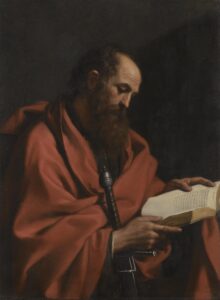
“Philosophy was, for the Greeks, the tutor that led them to Christ, just as the law led the Hebrews.”
Clement of Alexandria · Stromata, Book I, Chapter 5
Linha do tempo
c. 150

Birth

Born probably in Athens, to pagan parents.

c. 180

Arrival in Alexandria

After traveling through Greece, Asia Minor and Palestine in search of teachers, he meets Pantaenus in Alexandria.

before 189

Ordination to the presbyterate

Consolidates his role as a teacher in the church of Alexandria.

c. 190

Head of the Catechetical School

Succeeds Pantaenus at the head of the school of Alexandria.

195–203

Writes his trilogy

Composes the Protrepticus, the Paedagogus and the Stromata.

202–203

Persecution under Septimius Severus

Leaves Alexandria and seeks refuge outside Egypt.

211

Letter of Alexander of Jerusalem

Is mentioned with honor in a letter to the church at Antioch, indicating he was then living in Cappadocia or Jerusalem.

c. 215

Death

Dies in Cappadocia or Jerusalem; Alexander of Jerusalem already refers to him as deceased in a letter from around that year.

Obras e marcos

Protrepticus (Exhortation to the Greeks)

c. 195

An apologetic work inviting educated pagans to abandon their myths and embrace faith in Christ.

Paedagogus (The Instructor)

c. 198

A guide to Christian ethics for everyday life, presenting Christ as the teacher who educates the soul.

Stromata (Miscellanies)

c. 198–203

His most ambitious work, weaving together Greek philosophy, Jewish culture and Christian theology in defense of the faith against rival cults.

Who Is the Rich Man That Shall Be Saved?

c. 200

A treatise on wealth and salvation that interprets Jesus' encounter with the rich young man without demanding the literal abandonment of possessions.

Head of the Catechetical School of Alexandria

c. 190

Succeeds Pantaenus at the head of the school, training a generation of Christian teachers, among them Origen.

Contribuições
1

Dialogue between faith and philosophy

He argued that Greek philosophy, far from being an enemy of the gospel, prepared the Greeks to recognize Christ, opening the way for a theology that engages in dialogue with culture.

2

Training of Origen

As teacher of the Catechetical School, he trained Origen, who would become the most influential theologian of the following period.

3

First attempt at systematic theology

In the Stromata, he organized themes of faith, ethics and knowledge into a work that influenced later generations of Christian thinkers.

4

Controversial legacy acknowledged with sobriety

Passages from his lost work Hypotyposes were considered heterodox by Patriarch Photius in the ninth century, and the revision of the Roman Martyrology under Pope Clement VIII removed his name from the calendar of saints, on the advice of Cardinal Baronius, due to suspect doctrines.

Legado missionário

His method of engaging in dialogue with Greek culture rather than simply condemning it still inspires missionaries today who seek bridges with different philosophies and religions.

The conviction that every truth ultimately points to Christ sustains contextualized approaches to evangelism in cultures different from the Western one.

By training Origen, he laid the foundations of a tradition of theological teaching that would shape centuries of Christian mission and formation.

His Catechetical School became a model of a Christian intellectual training center, inspiring schools and missionary institutes that unite study and faith.

Outras pessoas