Who hasn’t sung “nearer, my God, to thee” at a funeral, in a hospital, or at some moment of pain, without knowing who wrote those words? The author was a 19th century Englishwoman, marked by loss and illness, who sought to express in simple verses the universal longing for closeness with God.
Sarah Fuller Flower was born on 22 February 1805, in Harlow, Essex. Daughter of editor and activist Benjamin Flower, she lost her mother as a child and grew up in a home of liberal ideas, educated by her father amid debates on religious and social freedom.
After her father’s death, she and her sister, the composer Eliza Flower, went to live under the care of Unitarian minister William Johnson Fox, in London. There they became part of an intellectual circle that included the poet Robert Browning and the writer Harriet Martineau.
Sarah tried a career as an actress, playing Lady Macbeth in 1837 to good reviews, but her fragile health, worsened by a deafness inherited from her father, led her to leave the stage. She then turned to writing, publishing poems and plays, among them the dramatic poem Vivia Perpetua, about a young Christian martyr and freedom of conscience.
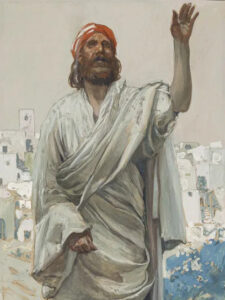
Her faith followed the Unitarian tradition, which rejects the doctrine of the Trinity held by most Christian churches. It was in this context, writing hymns for her pastor’s hymnal, that she composed, around 1841, the verses that would become Nearer, My God, to Thee, inspired by Jacob’s dream of the stairway at Bethel.
The hymn crossed doctrinal boundaries and became one of the most beloved songs in Christendom, sung at funerals, in hospitals, and in moments of trial around the world. The tradition, without definitive historical confirmation, that the Titanic’s band played it as the ship sank in 1912, helped cement it in popular memory.
Sarah died of tuberculosis on 14 August 1848, at age 43, two years after caring for her sister Eliza, who died of the same disease. She was buried beside her, and their parents, in the Foster Street cemetery, near Harlow.
Her verses continue to teach that closeness with God does not depend on comfort or favorable circumstances, but can be sought amid pain, doubt, and loss. It is this simple, universal longing that continues to unite Christians of different traditions around the world.