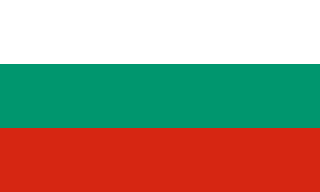
Discover
The identity of the nation
Bulgaria is a Balkan country in southeastern Europe, with around 6.8 million inhabitants and its capital in Sofia. On one side it borders the Black Sea, and to the north it is separated from Romania by the Danube River. Its territory combines mountains such as the Stara Planina and Rila with fertile plains and a sunny coastline, in a relatively small space of great variety.
It is one of the oldest nations in Europe: the First Bulgarian Empire was born in the 7th century, and in the 9th century the people adopted Christianity and received the Cyrillic alphabet, created from the work of the brothers Cyril and Methodius and their disciples. For this reason Bulgaria is revered as a cradle of Slavic Christian culture, and the Bulgarian Orthodox Church remains at the center of national identity.
Five centuries under Ottoman rule (1396 to 1878) left a deep mark on the country and a significant Muslim minority. In the 20th century, four decades of atheist communist rule (1944 to 1989) drew much of the population away from religious practice. Today many Bulgarians call themselves Christians by tradition and culture, but with little personal experience of the faith.
A member of the European Union since 2007, Bulgaria adopted the euro on January 1, 2026. It lives with political instability, low birth rates, youth emigration and an aging population. These challenges open space for a church that serves, welcomes and offers real hope.
Although officially a Christian-majority country, Bulgaria holds hearts hardened by distance from religion and communities little reached by the gospel, such as the Roma (Gypsies) and Muslim Turks. There is a call here for faith to stop being mere heritage and become a living encounter with Christ.
- 7th c. Khan Asparukh founds the First Bulgarian Empire in the Balkans.
- 864 The country adopts Christianity under Tsar Boris I; the Cyrillic alphabet spreads.
- 10th c. Golden age under Tsar Simeon the Great, with cultural and territorial expansion.
- 1396 The Ottomans conquer Bulgaria, beginning nearly five centuries of rule.
- 1762 The monk Paisius of Hilendar writes the Slavonic-Bulgarian history and awakens the National Revival.
- 1876 The April Uprising is crushed with harsh Ottoman repression.
- 1878 Liberation after the Russo-Turkish War; the Principality of Bulgaria is born.
- 1908 Full independence from the Ottoman Empire is proclaimed.
- 1944 The communist regime takes hold, repressing religion for four decades.
- 1989 Fall of communism and start of the democratic transition.
- 2007 Accession to the European Union.
- Today A country of Orthodox tradition, secularized, with minorities and social and spiritual challenges.
-
Bulgarianofficial, a Slavic language written in the Cyrillic alphabet
-
Turkishspoken by the Turkish minority, mainly in the south and northeast
-
Romanilanguage of the Roma (Gypsy) community
-
English and Russianunderstood mostly by the young and in the cities
Bulgaria covers about 110,000 km² in the eastern Balkan Peninsula. To the north, the Danube River separates it from Romania; to the east, it meets the Black Sea. The terrain alternates between the Danubian Plain, the Stara Planina range (the Balkan Mountains) and the Rila and Pirin massifs in the south, home to Musala Peak, the highest in the Balkans.
Major cities
- SofiaCapital and largest city, the political and economic center
- PlovdivOne of the oldest continuously inhabited cities in Europe
- VarnaMain port and seaside resort on the Black Sea
- BurgasPort and tourist city on the coast
- Veliko TarnovoFormer medieval capital, rich in history
Climate and temperature
Banitsa
Thin layered pastry filled with eggs and sirene cheese, common at breakfast.
Salada shopska
Salad of tomato, cucumber, onion and peppers topped with grated white cheese.
Tarator
Cold soup of yogurt, cucumber, garlic and dill, served in summer.
Kavarma
Slow-cooked meat stew with onion, peppers and spices, served in a clay pot.
Iogurte búlgaro
Traditional fermented yogurt, a national pride and part of the daily diet.
Rakia
Fruit brandy, a typical drink served on occasions and celebrations.
Understand
Culture and spirituality
2a · The culture
Faith as identity
The Orthodox tradition shapes culture, festivals and the calendar, even among the less devout.
Reversed yes and no gestures
Shaking the head from side to side means yes, and nodding upward means no.
Hospitality
Refusing food or drink offered by a host can come across as a slight.
Attachment to land and family
Family ties and the bond with one's home village are strong.
Legacy of the National Revival
Pride in the language, the Cyrillic alphabet and the heroes of liberation remains alive.
Marks of communism
Decades of state atheism left distrust and distance toward institutional religion.
- Mixing up the head gestures Yes and no are reversed compared with the West and cause misunderstandings.
- Refusing hospitality Flatly declining a host's food or drink can offend; accept at least a little.
- Treating the faith as mere folklore Orthodoxy is a deep part of identity; dismissing it closes doors.
- Projecting Western haste Relationships require time and trust before any openness.
- Generalizing about the minorities Turks and Roma have their own histories and realities; avoid stereotypes.
2b · The field
Areas of spiritual battle and cultural captivity to cover in prayer. Tap each point to understand:
Many call themselves Christians by tradition, without a living personal faith.
Decades of state atheism left spiritual indifference.
Faith is seen as cultural heritage, not an encounter with Christ.
The pursuit of economic stability takes the place of the eternal.
An identity tied to Orthodoxy can reject the new birth.
Distrust of institutions extends to organized religion.
Tensions among Bulgarians, Turks and Roma hinder the unity of the body of Christ.
Folk practices and superstitions coexist with the official faith.
Emigration and a lack of prospects feed emptiness and apathy.
The Roma community remains marginalized and little reached.
Bulgaria guarantees religious freedom in its Constitution, and Christians do not face open or violent persecution. The level of pressure on the faith is low, and believers can gather, worship and evangelize with relative freedom.
Even so, the Bulgarian Orthodox Church enjoys a privileged position, and Protestant and evangelical groups, seen by part of society as foreign or as sects, can encounter suspicion, bureaucracy and local resistance. In some cities, municipal authorities have already tried to restrict the meetings and activities of smaller churches.
The greatest obstacle, however, is not hostility but indifference: a secularized culture where faith tends to be treated as a distant tradition. The challenge for the gospel in Bulgaria is less about fear and more about hearts hardened by routine and unbelief.
The persecution score runs from 0 to 100: the higher it is, the greater the pressure on Christians.
Bulgaria is officially a majority Orthodox Christian country, yet it is home to peoples and communities little reached by the living gospel. Chief among them are the Muslim Turks, in the south and northeast, and the large Roma (Gypsy) community, often marginalized. Together with a broadly secularized population, these groups form the heart of the country's missionary challenge.
- 606K Unreached 9,2%
- 9K Minimally reached 0,1%
- 32K Superficially reached 0,5%
- 6M Partially reached 90,2%
- 0 Significantly reached 0%
- 5 Unreached 31,2%
- 1 Minimally reached 6,2%
- 5 Superficially reached 31,2%
- 5 Partially reached 31,2%
- 0 Significantly reached 0%
Source of people group data: Joshua Project (joshuaproject.net). Estimates, may vary.
Pomaco
Judeu Búlgaro
Turco Frontier
Deaf Frontier
Cigano balcã
Árabe
Source: Joshua Project. Estimates, may vary.
Pray
Intercede for this nation
Every nation carries a redemptive purpose. Marks that seem woven into the identity God desires to restore:
Go
Practical details for those who want to go
Local time
Cost of living
cheaper than the Western European average
Cost by city
Reference values (source: Numbeo). Confirm before traveling.
Practical points for those who go
- Learn basic Bulgarian: the Cyrillic alphabet dominates signs and menus, and English is more common among the young.
- Watch the head gestures: yes and no are reversed compared with the West.
- Build trust over time: deep relationships come before any spiritual openness.
- Respect the Orthodox tradition: it is a central part of Bulgarian identity.
- Be mindful of the least-reached communities: the Roma (Gypsies) and Muslim Turks.
Send and sustain
Not everyone goes, everyone takes part
Not everyone goes. Everyone takes part.
Behind every worker among these peoples stands a network of people who pray without ceasing, care for the family left behind, and faithfully sustain the work. Sending is mission too.
Start with your church: introduce this nation, adopt it in ongoing prayer, and walk alongside those God is raising up to go.