Discover
The identity of the nation
Grenada is a small island nation in the southeastern Caribbean, made up of the main island and the neighboring islands of Carriacou and Petite Martinique. With around 113 thousand inhabitants and its capital in Saint George’s, it is known as the Isle of Spice: cloves, cinnamon and, above all, nutmeg perfume the economy, the table and even the country’s flag.
The overwhelming majority of the population is Christian. Catholics, Anglicans and numerous evangelical and Pentecostal churches live side by side, and community life revolves around faith. Sunday is set aside for worship and family, and courtesy is part of the national identity: a simple good morning on entering a shop already opens doors.
Grenadian culture is born of the encounter of African, French and British roots. This blend appears in the English spoken in the streets, in the local creoles, in music, in dance and in Spicemas, the August carnival that celebrates the memory of the emancipation of enslaved Africans. History also holds wounds: colonization decimated the indigenous Kalinago people, and in 1979 a revolution and the subsequent 1983 military intervention left a deep mark on the people’s memory.
Despite the strong Christian presence, there are real spiritual challenges. For many, faith is inherited and nominal, more cultural than lived; the blending of religion with popular practices persists in some places, and drifting away from religion is advancing among the young. The church is numerous, but needs to mature in discipleship and depth.
Grenada is a welcoming, hospitable nation marked by tropical beauty. The call here is not so much for initial planting, but for revival and maturity: that the church may move from habit to a living encounter with Christ, and that this small island may become a bridge of blessing for the whole Caribbean.
- Before the arrival of Europeans, the island was inhabited by the indigenous Kalinago (Carib) people.
- 1498 Christopher Columbus sights the island on his third voyage; for more than a century the Caribs resist colonization.
- 1650 French settlers establish themselves; in the episode of Leapers' Hill, in Sauteurs, cornered Caribs leap from the cliff rather than surrender.
- 1763 Under the Treaty of Paris, France cedes Grenada to Great Britain after the Seven Years' War.
- 1974 Grenada gains independence from the United Kingdom, under the leadership of Eric Gairy.
- 1979 The New Jewel Movement, led by Maurice Bishop, seizes power in a coup and establishes the People's Revolutionary Government.
- 1983 Bishop is executed in an internal coup; a US-led military intervention follows.
- Today A stable, majority-Christian democracy, known as the Isle of Spice.
-
Englishofficial, used in education, government and the press
-
Grenadian Creole Englishthe native vernacular of nearly the entire population
-
French Creole (patois)spoken in rural areas of the north, especially near Gouyave
Grenada lies in the southeastern Caribbean, at the southern end of the Lesser Antilles arc. It is made up of the main island, of volcanic origin with mountainous terrain covered in tropical forest, and the smaller islands of Carriacou and Petite Martinique. Crater lakes, waterfalls, light sand beaches and spice plantations mark the landscape.
Major cities
- Saint George'sCapital and largest city, built around a horseshoe-shaped bay
- GrenvilleMain city on the east coast, center of the country's largest parish
- GouyaveFishing and nutmeg village on the west coast
- SauteursTown in the north, next to the historic Leapers' Hill
- HillsboroughLargest town on the island of Carriacou
Climate and temperature
Oil down
National dish: a stew of breadfruit, salted meat, chicken, dumplings and taro leaves cooked in coconut milk with spices.
Nutmeg
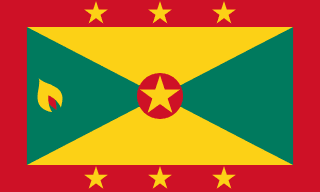
The island's signature spice, grated into sweets, drinks and dishes; it even appears on the national flag.
Flying fish
A typical catch, common on coastal tables, grilled or fried.
Lambi
Sea snail (conch) prepared in stews and sautés.
Plantain
A common side dish, fried or boiled, part of daily life.
Understand
Culture and spirituality
2a · The culture
Courtesy as a value
Greeting with good morning or good afternoon on arrival is a sign of respect and opens any conversation.
Faith at the center of life
Sunday is a day for worship and family, and religion shapes the rhythm of the community.
African and creole heritage
Culture, music and dance are born of the encounter of African, French and British roots.
Spicemas
An August carnival that celebrates the emancipation of enslaved Africans, with music and vibrant costumes.
Isle of Spice
Nutmeg and other spices are a national pride and part of the people's identity.
Small-island rhythm
Life is communal and slow-paced; time flows gently and personal bonds matter greatly.
- Ignoring the greeting on arrival Entering a place without greeting is seen as impolite.
- Disrespecting Sunday and faith Religion is central; treating worship with disdain offends the community.
- Haste and impersonality The pace is slower and relational; insisting on speed comes across as rude.
- Treating the island as a mere beach destination There is deep history, pain and culture behind the postcard.
- Wearing beachwear outside the beach In villages, churches and shops, modest attire is expected.
2b · The field
Areas of spiritual battle and cultural captivity to cover in prayer. Tap each point to understand:
For many, faith is a cultural inheritance, attended out of habit more than lived from the heart.
In some places, popular beliefs and practices mix with Christianity.
New generations are drifting away from the church and the faith inherited from their parents.
The memory of the revolution and the 1983 intervention left marks of division and distrust.
The fragile economy, tied to spices and tourism, generates insecurity and migration.
Homes with absent parents and broken bonds affect many children.
The multiplicity of churches sometimes generates rivalry instead of unity.
Consumerism and outside values compete for the hearts of new generations.
Excess in celebrations opens the door to addiction and broken families.
Carriacou and Petite Martinique receive less attention and pastoral care.
Grenada enjoys broad religious freedom. The Constitution guarantees freedom of worship, and Christians of various denominations live and practice their faith without state restriction. There is no organized persecution, and Christianity is an accepted and respected part of national life.
The church’s challenges here are not of hostility, but of depth. Faith that is widely inherited risks becoming mere formality, and drifting away from religion draws the young away from lived Christian experience. Prayer turns less toward protection from oppression and more toward revival, maturity and sincerity for a church that is already numerous.
The persecution score runs from 0 to 100: the higher it is, the greater the pressure on Christians.
Grenada is a nation with a small, fairly homogeneous population, mostly of African descent and Christian. The Kalinago people, the island's original inhabitants, were decimated during colonization. The picture of unreached peoples is small, and the main challenge is not access to the gospel, but the depth and renewal of a widely inherited faith.
- 0 Unreached 0%
- 4K Minimally reached 3,8%
- 0 Superficially reached 0%
- 3K Partially reached 2,5%
- 106K Significantly reached 93,7%
- 0 Unreached 0%
- 1 Minimally reached 20%
- 0 Superficially reached 0%
- 1 Partially reached 20%
- 3 Significantly reached 60%
Source of people group data: Joshua Project (joshuaproject.net). Estimates, may vary.
Source: Joshua Project. Estimates, may vary.
Pray
Intercede for this nation
Every nation carries a redemptive purpose. Marks that seem woven into the identity God desires to restore:
Go
Practical details for those who want to go
Local time
Cost of living
higher than other Caribbean islands
Cost by city
Reference values (source: Numbeo). Confirm before traveling.
Practical points for those who go
- English is enough to get by, but knowing a few creole expressions helps you connect with people.
- Wear light clothing; the climate is hot and humid year round.
- The most pleasant time is December to May, during the dry season.
- Respect Sunday: much of the commerce closes and life revolves around church.
- Always greet on arrival; courtesy is an essential part of the culture.
- The currency is the Eastern Caribbean dollar (XCD); cards work in the larger centers.
Send and sustain
Not everyone goes, everyone takes part
Not everyone goes. Everyone takes part.
Behind every worker among these peoples stands a network of people who pray without ceasing, care for the family left behind, and faithfully sustain the work. Sending is mission too.
Start with your church: introduce this nation, adopt it in ongoing prayer, and walk alongside those God is raising up to go.