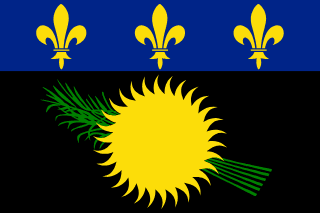
Discover
The identity of the nation
Guadeloupe is an archipelago in the eastern Caribbean, part of the Lesser Antilles, and legally an overseas department and region of France. Its two main islands, Basse-Terre and Grande-Terre, separated by a narrow channel, form the shape of a butterfly. Basse-Terre is the administrative capital, but Pointe-à-Pitre, on Grande-Terre, is the economic heart and largest urban area. About 380 thousand people live on these islands, under the French flag and the euro.
Guadeloupean identity was born from the painful encounter of many peoples. The population is predominantly of African descent, heirs of enslaved Africans brought to the sugar plantations. They were joined by European settlers, South Indian laborers (mostly Tamil) recruited after abolition, and Lebanese, Syrian, and Chinese communities. From this mixture came Guadeloupean Creole, a French-based language that carries the memory of slavery and is today a symbol of cultural pride, alongside official French.
The Christian faith deeply marks life on the islands. The majority is Catholic, a legacy of the long French presence, and Protestant and evangelical communities have been growing since the postwar period. Popular religiosity intertwines with Afro-Caribbean traditions, and among Indo-Guadeloupeans, Hindu rites and prayers in Tamil survive, with temples such as the one in Capesterre-Belle-Eau. This backdrop makes local spirituality rich, but also a mixture of religions.
As a French territory, Guadeloupe enjoys full religious freedom, good infrastructure, and access to education. Even so, it faces high unemployment, a high cost of living, and social tensions tied to the memory of slavery and dependence on the mainland. The islands lie in the path of hurricanes and have already faced eruptions of the La Soufrière volcano.
For missions, Guadeloupe is a Caribbean nation with Christian roots where the challenge is less about access and more about depth: a faith that often blends Christianity with popular beliefs, and cultural and linguistic pockets, such as Creole and the Indian heritage, that still lack living discipleship and the Scriptures in their heart language.
- Before colonization, the Arawak and later the Caribs (Kalinago) inhabited the islands, which they called Karukera.
- 1493 Christopher Columbus sights the island on his second voyage and names it Santa María de Guadalupe.
- 1635 French colonists settle and begin sugar cultivation and the importation of enslaved Africans.
- 1674 Guadeloupe is annexed to the Kingdom of France.
- 1794 The French Revolution abolishes slavery on the islands for the first time.
- 1802 Napoleon reinstates slavery; Louis Delgrès and Ignace lead a rebellion and die resisting.
- 1848 Final abolition of slavery, with Victor Schoelcher playing a major role.
- 1854-1889 Arrival of thousands of Indian laborers, mostly Tamil, for the plantations.
- 1946 Guadeloupe becomes an overseas department of France.
- Today A French region with a Christian majority, vibrant Creole culture, and social challenges.
-
Frenchofficial, used in administration, education, and media
-
Guadeloupean Creolespoken daily by the majority, a French-based language born in slavery
-
Tamilpreserved in prayers and rites of the Indo-Guadeloupean community
Guadeloupe is an archipelago in the Lesser Antilles, in the eastern Caribbean. Its two largest islands, Basse-Terre and Grande-Terre, form the shape of a butterfly separated by a narrow channel, joined by smaller islands such as Marie-Galante, La Désirade, and Les Saintes. Basse-Terre is mountainous, covered in tropical forest, and dominated by the La Soufrière volcano, the highest point in the Lesser Antilles. Grande-Terre is flatter, with limestone hills and beaches.
Major cities
- Pointe-à-PitreLargest city and economic center, on Grande-Terre
- Les AbymesMost populous commune, neighboring Pointe-à-Pitre
- Basse-TerreAdministrative capital, at the foot of the La Soufrière volcano
- Le GosierTourist and seaside resort hub
- Capesterre-Belle-EauKnown for its Indian heritage and Hindu temple
Climate and temperature
Colombo
Chicken or goat stew with a spice blend of Indian origin, a signature dish of the islands.
Bokit
Fried bread filled with cod, chicken, or seafood, a very popular street food.
Accras de morue
Fried, spicy cod fritters, a classic Creole appetizer.
Boudin créole
Pork blood sausage seasoned with herbs and pepper, served as a starter.
Matété
Spicy crab ragout with rice, traditional at Easter.
Understand
Culture and spirituality
2a · The culture
Creole heritage
Language, music, and cuisine born from the encounter between Africa, Europe, and India.
Gwoka
Song and drumming born of slavery, now an intangible heritage of humanity and a mark of local identity.
Memory of slavery
The history of sugar and the 1848 abolition remains alive in culture and social consciousness.
Indo-Guadeloupean community
Tamils brought after abolition maintain festivals, temples, and Hindu rites.
Family and neighborhood life
Community ties and Caribbean hospitality are highly valued.
- Treating Guadeloupe as a simple beach destination It is a land with its own history, language, and identity, not just a postcard.
- Ignoring Creole and local culture Valuing the language and music opens doors and shows respect.
- Speaking lightly about slavery The subject is sensitive and central to the islands' memory; treat it with seriousness.
- Assuming Catholic faith is mere formality The religiosity is sincere, even if often blended with popular beliefs.
2b · The field
Areas of spiritual battle and cultural captivity to cover in prayer. Tap each point to understand:
The Christian faith blends with Afro-Caribbean and popular beliefs, diluting the gospel.
Many call themselves Christian by tradition, without discipleship or transformed lives.
Popular magic and witchcraft practices persist among part of the population.
The memory of slavery has left deep marks that call for healing and reconciliation.
High unemployment and dependence on the mainland fuel frustration and youth flight.
Imported consumer goods and tourism reinforce the pursuit of possessions as a measure of worth.
Alcohol abuse and festival culture can crowd out deeper spiritual life.
The Hindu and Tamil-rooted community remains little reached by the gospel.
The heart language of many still lacks the full Scriptures translated.
Tensions between backgrounds, classes, and generations fragment society.
As an overseas department and region of France, Guadeloupe falls under French law, which guarantees full religious freedom. Christians live and practice their faith without legal restrictions, and Christianity is the majority religion on the islands.
There is no organized persecution against Christians. The challenges are of a different order: a faith that is often nominal or blended with popular beliefs, growing secularization imported from the mainland, and the spiritual isolation of groups such as the Hindu-rooted Indo-Guadeloupean community. The obstacle is not hostility, but superficiality and religious syncretism, which call for deep evangelism and discipleship, not defense against attacks.
The persecution score runs from 0 to 100: the higher it is, the greater the pressure on Christians.
Guadeloupe has few people groups, most of them already reached by Christianity. The dominant group is Guadeloupean Creoles, of African and European roots. The main missionary challenge lies with the Indo-Guadeloupean community, of Tamil and Hindu heritage, and with the depth of faith in a context of nominal Christianity and syncretism. Guadeloupean Creole still does not have the complete Bible in its language.
- 0 Unreached 0%
- 0 Minimally reached 0%
- 11K Superficially reached 3%
- 343K Partially reached 94,4%
- 10K Significantly reached 2,6%
- 1 Unreached 16,7%
- 0 Minimally reached 0%
- 2 Superficially reached 33,3%
- 2 Partially reached 33,3%
- 1 Significantly reached 16,7%
Source of people group data: Joshua Project (joshuaproject.net). Estimates, may vary.
Source: Joshua Project. Estimates, may vary.
Pray
Intercede for this nation
Every nation carries a redemptive purpose. Marks that seem woven into the identity God desires to restore:
Go
Practical details for those who want to go
Local time
Cost of living
similar to mainland France, with expensive imports
Cost by city
Reference values (source: Numbeo). Confirm before traveling.
Practical points for those who go
- Learn French: it is the official language and used in administration; Creole is the everyday language.
- Factor in the high cost of living: many products are imported and expensive.
- Plan your trip outside the hurricane season (Jun to Nov), if possible.
- Use the euro: the currency is the same as France's, and cards are widely accepted.
- Respect the memory of slavery and Creole culture in conversations and attitudes.
Send and sustain
Not everyone goes, everyone takes part
Not everyone goes. Everyone takes part.
Behind every worker among these peoples stands a network of people who pray without ceasing, care for the family left behind, and faithfully sustain the work. Sending is mission too.
Start with your church: introduce this nation, adopt it in ongoing prayer, and walk alongside those God is raising up to go.