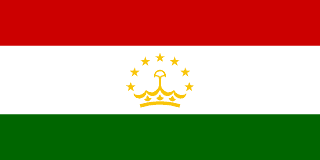
Discover
The identity of the nation
Tajikistan is a mountainous country: more than 90% of its territory lies above a thousand meters in altitude, and much of it belongs to the Pamir range, which many call “the roof of the world.” It is the smallest and poorest of the former Soviet countries in Central Asia, but also one of the most direct heirs of the great Persian civilization, since Tajik, the country’s official language, is practically a dialect of Persian (Farsi) spoken in Iran and Afghanistan.
For centuries, cities like Bukhara and Samarkand, now in neighboring Uzbekistan, were centers of culture, science, and poetry in the Persian world under the Samanid Empire (9th and 10th centuries). This history left a deep mark of cultural pride among Tajiks, even after the territory was conquered by the Russians in the 19th century and turned into a Soviet republic in 1929. When the Soviet Union collapsed in 1991, Tajikistan declared independence, but almost immediately plunged into a bloody civil war between regional factions and Islamist groups, which lasted from 1992 to 1997 and left tens of thousands dead.
Today the country continues rebuilding its economy, heavily dependent on money sent home by around 1.2 million Tajiks who work abroad, mainly in Russia. Sunni Islamic faith is central to national identity, to the point that “being Tajik” and “being Muslim” are, for most of the population, almost the same thing. Even so, the government keeps tight control over religious practice: mosques, Islamic schools, and any religious group must have official registration, and anyone under 18 is legally barred from taking part in religious activities.
In this setting, the Christian church is small, discreet, and made up mostly of descendants of Orthodox Russians and Ukrainians, plus a small number of Tajiks who have chosen to follow Jesus, even knowing the price this can cost with family and community. The Tajik people, numbering more than nine million, remain one of the largest unreached people groups in the world: fewer than one in a thousand identify as Christian of any tradition.
Despite the geographic isolation of the mountains and the restrictions placed on faith, Tajikistan holds a hospitable, poetic, and resilient people, forged by centuries of history at the crossroads of the Silk Road. Praying for this people means asking that the same courage that helped them survive war and poverty will one day lead them to know the love of Christ up close.
- 9th-10th century The Samanid Empire flourishes with Bukhara and Samarkand as Persian cultural centers, the foundation of Tajik identity
- 13th century Genghis Khan's Mongol invasion devastates the region
- 16th-19th century Uzbek khanates, such as the Khanate of Bukhara, dominate the territory that is now Tajikistan
- 1860s The Russian Empire conquers much of Central Asia
- 1924 The Tajik territory becomes an autonomous republic within Soviet Uzbekistan
- 1929 Tajikistan becomes its own Soviet republic
- 1991 Independence from the Soviet Union, declared on September 9
- 1992-1997 Bloody civil war between regional factions and Islamist groups
- 1997 UN-mediated peace agreement ends the conflict
- Today The poorest country of the former Soviet Union, heavily dependent on remittances from migrant workers in Russia
-
TajikOfficial language, a dialect of Persian (Farsi) written in the Cyrillic alphabet
-
RussianUsed in trade, public administration, and as a second language among older generations
-
UzbekSpoken by the Uzbek minority, mainly in the north and the Fergana Valley
-
Pamiri languagesGroup of languages spoken in the mountains of Gorno-Badakhshan, such as Shughni and Wakhi
-
KyrgyzSpoken by a small minority in the mountainous east of the country
Tajikistan is a landlocked country in Central Asia, bordered by Uzbekistan, Kyrgyzstan, China, and Afghanistan. It is one of the most mountainous countries in the world: more than 90% of its territory is covered by ranges such as the Pamir, the Alai, and the Fann, with peaks over 7,000 meters high. Only a small part of the territory, in the valleys and plains of the west, is suitable for agriculture and holds most of the population.
Major cities
- DushanbeCapital and largest city of the country, political and economic center; its name means "Monday" in Tajik, the day its old market used to operate
- KhujandSecond largest city, in the fertile Fergana Valley in the north, with more than 2,500 years of history
- KulobHistoric city in the southern Khatlon region, one of the country's main population centers
- KhorogSmall mountain town, gateway to the remote Pamir region
Climate and temperature
Osh (plov)
Rice cooked with carrots, onion, and pieces of meat, all fried together in a cauldron called a qazan; the most common dish served at festivals and weddings
Qurutob
Considered the national dish: pieces of buttery bread (fatir) soaked in a sauce made from qurut, a dry, salty cheese dissolved in water, topped with onion and tomato
Sambusa
Baked pastry filled with ground meat, onion, and spices, a Persian culinary heritage that traveled along the Silk Road
Laghman
Hand-pulled noodles served with a meat and vegetable stew, a dish found throughout Central Asia
Non
Round bread baked in a clay oven (tandir), present at every meal and treated with respect: never turned upside down or thrown away
Green tea
The national drink, offered to any visitor as a sign of hospitality, almost always before anything else
Understand
Culture and spirituality
2a · The culture
Silk Road
Tajikistan sits in the middle of the ancient trade route that linked China to the West, which explains the mix of Persian, Turkic, and Chinese influences in local culture
Persian poetry
The Tajik language is a dialect of Persian, and the classical poetry of authors like Rudaki is a source of national pride, recited at celebrations and weddings
Suzani embroidery
Hand-embroidered fabrics with floral patterns, traditionally made by women as part of a wedding trousseau
Falak music
Traditional musical style of long, improvised melodies expressing longing, suffering, and faith
Buzkashi
Traditional Central Asian equestrian sport in which riders compete for a goat carcass, still alive at festivals and holidays
Dastarkhan
The low table where meals are served; eating around it is an act of communion and hospitality
- Refusing food or tea that is offered Seen as a serious lack of respect for hospitality, one of the most sacred values in Tajik culture
- Showing the soles of your feet or stepping on the dastarkhan cloth Feet are considered impure, and the meal cloth is treated with respect
- Joking about Islamic practices Can provoke a strong reaction from both ordinary people and authorities, who closely monitor any religious discussion
- Photographing government buildings, police, or military installations Can lead to detention; state surveillance is heavy throughout the country
- Openly criticizing the government in conversation Puts both the visitor and any Tajik they are speaking with at risk
- Wearing short or low-cut clothing outside Dushanbe Seen as disrespectful in rural and more conservative areas
2b · The field
Areas of spiritual battle and cultural captivity to cover in prayer. Tap each point to understand:
The government tightly controls religious practice, treating faith more as a mandatory ethnic identity than a personal choice of the heart
Amulets, belief in the evil eye, and spiritual healers exist side by side with official Islam
Visits to saints' tombs (mazar) to ask for blessings and healing are common even among practicing Muslims
Pressure from family and community keeps many from seeking or publicly declaring another faith
About 1.2 million Tajiks live abroad, which fragments families and communities
Corruption feeds disbelief in public institutions and hopelessness
Rivalries between regions, which helped fuel the civil war, still breed distrust between groups
Decades of state atheism left a generation without clear spiritual roots
Entire communities in the Pamir go months isolated by snow, almost without any contact with the gospel
In Tajikistan, following Christ comes at a high cost. Leaving Islam to become a Christian is seen as betraying one’s own ethnic and national identity, since almost everyone there understands being Tajik as being Muslim. Pressure usually comes from within the home: family, neighbors, and local religious leaders respond with threats, expulsion from home, or even violence against those who convert.
The government also closely monitors any religious activity outside official Islam. Churches and Christian groups must register and can be shut down at any time. Since 2015, Baptist, evangelical, and Pentecostal communities have faced growing police raids, interrogations, fines, and confiscation of Bibles and other Christian materials. A law bars anyone under 18 from taking part in any religious activity, which strikes hard at the small Tajik church, made up mostly of young people.
It is estimated that around three thousand Christians of Muslim background live in the country, most gathering in small, discreet groups in homes to avoid drawing attention. Even so, faith remains alive, sustained by a quiet courage that spans generations.
The persecution score runs from 0 to 100: the higher it is, the greater the pressure on Christians.
Tajikistan is home to 28 cataloged ethnic groups, and 24 of them (85.7%) are still considered unreached with the gospel. This corresponds to virtually the entire population of the country, nearly 11 million people. The Tajik people, who make up the large majority, have fewer than 1 in 1,000 identifying as Christian of any tradition. The few more reached groups are small communities of Russian and Armenian origin, historically linked to the Orthodox Church.
- 10.7M Unreached 99,5%
- 0 Minimally reached 0%
- 42K Superficially reached 0,4%
- 10K Partially reached 0,1%
- 0 Significantly reached 0%
- 24 Unreached 85,7%
- 0 Minimally reached 0%
- 3 Superficially reached 10,7%
- 1 Partially reached 3,6%
- 0 Significantly reached 0%
Source of people group data: Joshua Project (joshuaproject.net). Estimates, may vary.
Lak Frontier
Afegão
Southern Pashtun Frontier
Tártaro
Northern Uzbek Frontier
Sanglechi Frontier
Árabe Uzbeque Frontier
Source: Joshua Project. Estimates, may vary.
Pray
Intercede for this nation
Every nation carries a redemptive purpose. Marks that seem woven into the identity God desires to restore:
Go
Practical details for those who want to go
Local time
Cost of living
About R$ 27
Cost by city
Reference values (source: Numbeo). Confirm before traveling.
Practical points for those who go
- Time zone: Tajikistan is 8 hours ahead of Brasília (UTC+5), with no daylight saving time
- Currency: the Tajikistani somoni (TJS) is the official currency; international cards have limited acceptance outside Dushanbe
- Language: Tajik is the official language, but Russian is still widely used in trade and among older generations
- Mountain roads: travel between cities can take much longer than the distance suggests, due to the terrain and poor road conditions
- Electricity: power outages are common in winter, especially outside the capital, due to reliance on hydroelectric power
- Connectivity: internet and cell signal are weak or nonexistent in the most remote areas of the Pamir
Send and sustain
Not everyone goes, everyone takes part
Not everyone goes. Everyone takes part.
Behind every worker among these peoples stands a network of people who pray without ceasing, care for the family left behind, and faithfully sustain the work. Sending is mission too.
Start with your church: introduce this nation, adopt it in ongoing prayer, and walk alongside those God is raising up to go.