1895–1987

Philosopher · Apologist

Cornelius Van Til

Resumo
Reformed theologian and philosopher, born in the Netherlands and based in the United States. Creator of presuppositional apologetics, he taught for more than four decades at Westminster Theological Seminary, arguing that all human reason presupposes, in some way, the revelation of God.
Quem foi
Biografia

Few theologians debated how we know what we know as much as Cornelius Van Til. The son of Dutch farmers, he crossed the ocean as a young boy and spent his life asking whether human reason can, in fact, stand on its own without God. That question marked every class he taught.

Born in 1895 in Grootegast, the Netherlands, Van Til was ten years old when his family emigrated to Indiana in the United States. He was the first of his siblings to attend higher education, graduating from Calvin College in 1922 and then moving on to Princeton Theological Seminary.

At Princeton, he completed his master’s degree in theology in 1925, the same year he married Rena Klooster, his childhood companion; his doctorate in philosophy would follow in 1927. The marriage lasted 53 years, until her death in 1978.

When theological liberalism advanced over Princeton Theological Seminary, Van Til joined J. Gresham Machen and other professors in founding Westminster Theological Seminary in 1929, in Philadelphia. There he would teach apologetics and systematic theology for more than four decades.

Van Til argued that there is no neutral ground between believers and unbelievers: every person already starts from presuppositions about God, the world, and knowledge. He gave this method the name presuppositional apologetics, today associated with his name in any manual of Reformed theology.

His defense of the faith was not always conciliatory. His harsh criticisms of Karl Barth’s theology and his long dispute with colleague Gordon Clark over the incomprehensibility of God divided the Orthodox Presbyterian Church. For theologian John Frame, a disciple of Van Til, neither side was at its best in that dispute.

Van Til retired from regular teaching in 1972, but continued teaching occasionally until 1979. He died in 1987, in Philadelphia, just days before his 92nd birthday. He left behind dozens of books and hundreds of articles, now gathered in editions that continue to train pastors and Reformed apologists.

His conviction that all gospel preaching already presupposes the truth of God continues to guide those who today proclaim the faith to peoples and cultures with very different worldviews. Van Til reminded us that the gospel does not ask human reason for permission: it confronts it and transforms it.
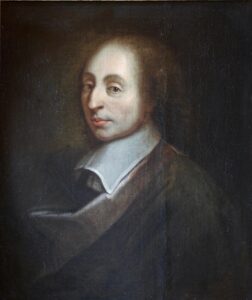
“Only those who believe in God have the right to maintain that there is any explanation at all.”
Cornelius Van Til · Essay "Why I Believe in God"
Linha do tempo
1895

Birth in Grootegast, Netherlands

Son of a farming family, he would be the first of the siblings to attend higher education.

1905

Emigration to the United States

The family moved to Highland, Indiana, when he was ten years old.

1922

Graduation from Calvin College

Completed his undergraduate studies in Grand Rapids, Michigan.

1925

Master's degree at Princeton and marriage

Completed his ThM at Princeton Theological Seminary and married Rena Klooster.

1927

Doctorate (PhD) from Princeton University

Concluded his academic training with a dissertation in philosophy.

1929

Founding of Westminster Theological Seminary

Became founding professor of apologetics, a position he would hold for decades.

1946

Publication of The New Modernism

A systematic critique of the theology of Karl Barth and Emil Brunner.

1972

Retirement from regular teaching

He continued teaching occasionally until 1979.

1987

Death in Philadelphia

He died at age 91, just days before his 92nd birthday.

Obras e marcos

PhD in Philosophy from Princeton

1927

Completed his doctorate at Princeton University, laying the philosophical foundation for all his later apologetic work.

Founding of Westminster Theological Seminary

1929

Joined the group of professors who left Princeton with J. Gresham Machen to found a seminary faithful to historic Reformed theology, in Philadelphia.

The New Modernism

1946

A work that critically examines the theology of Karl Barth and Emil Brunner, one of the first major evangelical examinations of European neo-orthodoxy.

The Defense of the Faith

1955

Systematized the presuppositional method in its mature form, becoming the leading apologetics manual of the Reformed tradition.

A Christian Theory of Knowledge

1969

Developed his Christian theory of knowledge, showing how every pursuit of truth already presupposes the existence of God.

Christian Apologetics

1975

Gathered into a book the apologetics course he had taught since the seminary's founding, becoming required reading for generations of students.

Contribuições
1

Presuppositional apologetics

He popularized the method that begins from the presupposition of God's existence, rather than seeking neutral ground with the unbeliever, giving rise to an entire school of Reformed apologetics.

2

Critique of liberal theology

His analyses of Karl Barth and neo-orthodoxy helped evangelical theologians distinguish the historic Christian faith from the new European theological currents of the 20th century.

3

Training generations of pastors

As professor of apologetics and systematic theology for more than four decades at Westminster, he trained pastors, missionaries, and teachers across dozens of Reformed denominations.

4

Broad philosophical influence

His thought shaped apologists and theologians such as Greg Bahnsen, John Frame, and R. J. Rushdoony, who developed and spread his approach in various directions.

Legado missionário

The conviction that there is no religious neutrality encourages missionaries to proclaim the gospel without first trying to prove it by the supposedly neutral criteria of the local culture.

His method inspired apologetics courses in mission seminaries around the world, preparing workers to engage with worldviews very different from the Western one.

By insisting that every culture already operates with presuppositions about God, he helped missiologists take the worldviews of the peoples they reached seriously, rather than treating them as an empty void to be filled.

Disciples such as Greg Bahnsen and John Frame continue to popularize his method in evangelism and apologetics training used by Reformed churches and mission agencies.

Outras pessoas