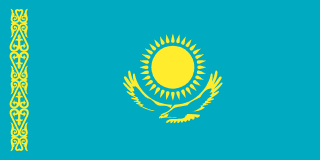
Conheça
A identidade da nação
Kazakhstan is the largest landlocked country in the world and the heart of Central Asia, a nation of endless steppes, snow capped mountains and a long nomadic tradition. After decades under Soviet rule, the country gained independence in 1991 and today combines wealth in oil and minerals with an identity still seeking balance between Islam, its Russian legacy and its nomadic roots.
Most of the population follows Sunni Islam, increasingly tied to Kazakh national identity. Alongside it survives a strong legacy of secularism inherited from Soviet times, when faith was suppressed by the state. Christians are few and mostly descendants of Russians and Ukrainians linked to the Orthodox Church; among ethnic Kazakhs themselves, the number of followers of Christ is very small.
The complete Bible was only published in the Kazakh language in 2010, a reminder of how recent access to Scripture in the heart language still is for this people. Converting to Christ from a Muslim family carries a high cost, it can mean rejection by the family, isolation from the community and, in some cases, open hostility, especially for women.
The state keeps close watch over religious groups, and Protestant churches face inspections, fines and restrictions on gathering outside registered places of worship. Even so, personal relationships, the natural hospitality of the Kazakh people and growing access to the internet and radio have opened small doors for the gospel, especially among young people seeking meaning beyond traditional Islam or the void left by Soviet atheism.
Kazakhstan is today one of the least reached places in Central Asia, with dozens of peoples, including the Kazakhs, Uzbeks and Uyghurs themselves, practically without a church of their own. It is a crossroads nation between Europe and Asia, between tradition and modernity, where the church is still small, but where God is already forming the first faithful disciples in the midst of the steppe.
- Nomadic peoples of the steppes, ancestors of the Kazakhs, have lived from horse breeding and herding for millennia.
- 8th century Islam reaches the region via Central Asian trade routes.
- 1465 Founding of the Kazakh Khanate, uniting nomadic tribes of the steppe under one people.
- 18th-19th centuries The Russian Empire advances over the territory and progressively annexes Kazakh lands.
- 1920 The region becomes a Soviet republic, under Moscow's control.
- 1930-1933 Forced collectivization of agriculture triggers a famine that kills more than a million Kazakhs.
- 1949-1989 Hundreds of nuclear tests are carried out at Semipalatinsk, in the east of the country.
- 1991 Independence from the Soviet Union, the last republic to break away.
- 1997 The capital moves from Almaty to Astana, in the center of the country.
- 2010 The complete Bible is published for the first time in the Kazakh language.
- 2022 Popular protests over living conditions result in changes in the country's leadership.
- Today A nation in transformation, rich in oil and minerals, between its nomadic heritage, Islam and the Soviet legacy.
-
Kazakhofficial state language, dominant in rural areas and the south of the country
-
Russianlanguage of communication between ethnic groups, still dominant in cities and government
-
Uzbek, Uyghur and other languagesspoken by ethnic minorities in the country
-
German and Koreanlanguages of communities deported to the country during the Soviet era
Kazakhstan is the largest landlocked country in the world and the ninth largest on the planet, a vast expanse of steppes, deserts and mountains between Eastern Europe and Central Asia. To the west, its shores touch the Caspian Sea, the largest enclosed lake in the world, and to the east rise the snow capped ranges of the Tian Shan and Altai mountains, on the border with China.
Principais cidades
- AstanaPlanned capital, futuristic architecture on the banks of the Ishim River
- AlmatyFormer capital, largest city and cultural center, at the foot of the Tian Shan mountains
- ShymkentCity of more traditional customs, gateway to the south of the country
- KaragandaFormer coal mining center, marked by the history of Soviet labor camps
- TurkestanSacred city of Central Asian Islam, home to the mausoleum of Khoja Ahmed Yassawi, a 12th century Sufi leader
- AtyrauOil city on the shores of the Caspian Sea
Clima e temperatura
Beshbarmak
National dish of boiled meat (horse, lamb or beef) over thin noodles, traditionally eaten with the hands.
Samsa
Baked pastry filled with meat and onion, a legacy of the old Central Asian trade routes.
Baursak
Fried dough balls, served with tea, honey or jam at nearly every festive meal.
Kumis
Fermented mare's milk, a traditional drink of the steppe nomads, mildly alcoholic.
Shubat
Fermented camel's milk, thicker than kumis, valued for its nutritional properties.
Lagman
Hand pulled noodle soup with meat and vegetables, a dish common among the peoples of Central Asia.
Entenda
Cultura e espiritualidade
2a · A cultura
Nomadic hospitality (konakasy)
Welcoming a guest well is a sacred duty; refusing offered tea or food is disrespectful.
The yurt
The round felt covered tent that still shelters nomadic families on the steppe, the greatest symbol of Kazakh identity.
Eagle hunting (berkutchi)
An ancient tradition in the Altai mountains, in which the hunter trains a golden eagle to hunt foxes and hares.
Dombra music
The two stringed instrument that accompanies sung poetry and preserves the history of the Kazakh people.
Nauryz
The new year and arrival of spring festival, celebrated with dances, abundant food and traditional horseback games.
Respect for elders
Age brings authority and wisdom, and younger people greet and serve their elders first.
- Refusing offered food or tea It is seen as a great disrespect to the tradition of nomadic hospitality.
- Criticizing Islam or another faith in public It causes embarrassment and can expose the host to problems.
- Treating nomadic heritage as backward It is a source of pride, not shame, for the Kazakh people.
- Being informal with older people Respect for age hierarchy is taken seriously.
- Photographing government buildings or military installations It can cause problems with local authorities.
- Speaking ill of the government in public spaces The topic is sensitive and closely monitored.
2b · O campo
Áreas de batalha espiritual e cativeiro cultural a serem cobertas em oração. Toque em cada ponto para entender:
Decades of state imposed atheism left a spiritual void that still marks generations.
Islam is increasingly tied to national identity, which makes conversion of Kazakhs harder.
Pre-Islamic beliefs in steppe spirits and folk healers still influence daily life for many.
Pilgrimages to the tombs of religious leaders mix Islam with ancient popular beliefs.
The wealth of natural resources fuels the pursuit of status, comfort and consumption.
Those who convert to Christianity may be cast out of family and community.
Strict religion laws limit freedom of worship and of proclaiming the gospel.
A Soviet era legacy that still causes great suffering in many homes.
Attachment to ancestral traditions can make the gospel seem foreign and distant.
Entire generations grew up without a clear spiritual reference, between atheism and Islam.
In Kazakhstan, those who decide to follow Christ from a Muslim family face the harshest pressure: rejection by the family, community surveillance and, in some cases, attacks, especially against young women who convert. Islam is increasingly associated with Kazakh identity, and abandoning that faith is seen by many as a betrayal of one’s own people.
Protestant churches, such as Baptists and Pentecostals, are treated by the state as foreign influence and face inspections, fines and even interruptions during services. Since 2022, a stricter religion law has made gatherings outside registered places of worship even more difficult. Orthodox churches, linked to the minority of Russian origin, face less pressure since they are more removed from the Kazakh population in general.
Even so, a small number of Kazakhs quietly and increasingly discover the Christian faith, often through personal relationships, radio or the internet, a sign of hope amid surveillance.
O score de perseguição vai de 0 a 100: quanto maior, maior a pressão sobre os cristãos.
Kazakhstan is home to 27 unreached people groups, almost all of Muslim tradition. The largest is the Kazakh people itself, numbering more than 14 million, still with very little contact with an evangelical church or the Scriptures in their own language. Other groups also appear, such as Uzbeks, Uyghurs, Azerbaijanis and Chechens, many living in cities and villages of the steppe. Decades of Soviet rule left a strong secular legacy, and today much of the population moves between atheism inherited from the Soviet Union and an Islam increasingly tied to national identity.
- 16,5 mi Não alcançado 80%
- 12 mil Pouco alcançado 0,1%
- 3,3 mi Superficialmente alcançado 16%
- 687 mil Parcialmente alcançado 3,3%
- 127 mil Significativamente alcançado 0,6%
- 27 Não alcançado 50,9%
- 4 Pouco alcançado 7,5%
- 17 Superficialmente alcançado 32,1%
- 4 Parcialmente alcançado 7,5%
- 1 Significativamente alcançado 1,9%
Fonte dos dados de povos: Joshua Project (joshuaproject.net). Estimativas, podem variar.
Tártaro
Azeri do norte
Balkar Fronteira
Árabe Uzbeque Fronteira
Uigur Fronteira
Checheno Fronteira
Turco meskhetian Fronteira
Fonte: Joshua Project. Estimativas, podem variar.
Ore
Interceda por esta nação
Cada nação carrega um propósito redentor. Marcas que parecem fazer parte da identidade que Deus deseja restaurar:
Vá
Logística para quem deseja ir
Horário local
Custo de vida
lower than Western Europe
Custo nas cidades
Valores de referência (base: Numbeo). Confirme antes de viajar.
Pontos práticos para quem vai
- Learn a few words in Russian: it is still the language of communication between ethnic groups, alongside Kazakh.
- Bring clothes for extreme cold: winters reach -30°C on the steppe.
- Respect your elders: greet older people first.
- Accept the tea and food offered: refusing is disrespectful to their hospitality.
- Avoid photographing government buildings: it can cause problems with the authorities.
- Use cash in tenge: cards are accepted in cities, but carry cash for rural areas.
- Download a translation app: English is rarely spoken outside major centers.
- Use discernment at social gatherings: alcohol consumption is common at gatherings and parties.
Envie e sustente
Nem todos vão, todos participam
Nem todos vão. Todos participam.
Por trás de cada obreiro entre estes povos existe uma rede de gente que ora sem parar, cuida da família que ficou e sustenta o trabalho com fidelidade. Enviar também é missão.
Comece pela sua igreja: apresente esta nação, adote-a em oração contínua e caminhe junto de quem Deus está levantando para ir.