Few things wound as deeply as injustice left unanswered within a family, when the one who should protect chooses silence instead. Absalom lived out this pain in its most extreme form, and the response he gave to it ended up destroying everything he wanted most.
Absalom was David’s third son, born of Maacah, daughter of the king of Geshur (2 Samuel 3:3). Scripture highlights his physical beauty, especially his long hair, to the point of saying that no man in the whole nation was so highly praised (2 Samuel 14:25,26).
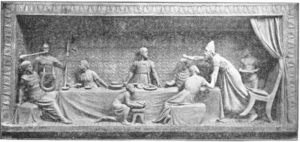
When his brother Amnon raped Tamar, sister to both of them, and David did not punish the crime, Absalom kept his hatred silent for two years (2 Samuel 13:22,23). He then set a trap and had Amnon killed, fleeing afterward to Geshur (2 Samuel 13:28,29,37,38).
After three years of exile and a reconciliation mediated by Joab, Absalom returned to Jerusalem, but David kept him at a distance for two more years before restoring the relationship (2 Samuel 14:23,24,28,33). The gap opened a wound that never truly healed.
Ambitious and popular, Absalom set about winning the hearts of the people, sitting at the city gate to judge disputes and promising the justice David seemed to neglect (2 Samuel 15:2,3,4,5,6). In Hebron, he proclaimed himself king and raised an armed revolt against his own father (2 Samuel 15:10,12).
David fled Jerusalem, and the civil war ended in the forest of Ephraim, where Absalom, his hair caught in an oak tree, was killed by Joab despite the king’s explicit order that his life be spared (2 Samuel 18:5,9,14,15). David’s cry, ‘my son, my son Absalom’ (2 Samuel 18:33), remains one of the most sorrowful laments in Scripture.
Absalom’s story is a reminder that unresolved injustice tends to rot into bitterness, and that ambition fed by old wounds rarely builds anything that lasts. It also shows how much a father can go on loving a son even after betrayal, a distant echo of the love God has for children who rebel against him.