King of Judah · Reformer

Hezekiah

Período~715 BC – ~686 BC
Resumo
Hezekiah was one of the most faithful kings of Judah, who tore down the idolatrous altars raised by his father and reopened the defiled temple. When the Assyrian army besieged Jerusalem, he responded with prayer, and saw God deliver the city in a supernatural way.
Quem foi Hezekiah
Biografia

Almost everyone has felt that tightness in the chest before a problem bigger than any solution within reach: an incurable disease, an impossible debt, an adversary who seems unbeatable. That was exactly the feeling Hezekiah faced as king, surrounded by the most feared army of his time.

Hezekiah came to the throne of Judah after Ahaz, his father, who had filled the land with pagan altars. From the start of his reign, he tore down the idolatrous altars, broke the bronze serpent that the people had taken to worshiping, and reopened the doors of the temple (2 Kings 18:4; 2 Chronicles 29:3).

He called the people back to the Passover of the Lord, sending messengers even to the northern tribes (2 Chronicles 30:1-27), and the sacred text points out that no other king of Judah trusted the Lord as he did, either before or after him (2 Kings 18:5).

That faith was tested when Sennacherib, king of Assyria, marched against Judah and laid siege to Jerusalem. The Assyrian commander mocked Hezekiah and the God of Israel himself before the city walls, promising total destruction (2 Kings 18:19-35).

Rather than respond only with an army or diplomacy, Hezekiah tore his own clothes and put on sackcloth when he heard the threat (2 Kings 19:1), and later went to pray in the temple, spreading Sennacherib’s letter before the Lord (2 Kings 19:14-19). That very night, an angel of the Lord struck the Assyrian camp, and Jerusalem was saved without a single arrow being fired (2 Kings 19:32-35).

Years later, gravely ill and warned by Isaiah that he would die, Hezekiah turned his face to the wall and wept before God, asking for more years of life. The Lord heard him, added fifteen years to his days, and confirmed the promise with a sign on the stairway of Ahaz (2 Kings 20:1-11).

But not even the most faithful king of Judah was free from stumbling: when envoys from Babylon arrived, Hezekiah proudly displayed all the treasures of the kingdom, a gesture Isaiah warned would be the seed of the future Babylonian exile (2 Kings 20:12-19).

Hezekiah’s life shows that genuine faith does not remove fear, but takes it to the right place: at the feet of the altar, not before the enemy. When human resources run out, prayer is still the first resource, not the last.
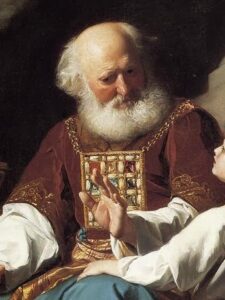
Versículos marcantes

Hezekiah trusted in the LORD, the God of Israel. There was no one like him among all the kings of Judah, either before him or after him.

2 Kings 18:5

Now, LORD our God, deliver us from his hand, so that all the kingdoms of the earth may know that you alone, LORD, are God.

2 Kings 19:19

Be strong and courageous. Do not be afraid or discouraged because of the king of Assyria and the vast army with him, for there is a greater power with us than with him.

2 Chronicles 32:7

Visões, profecias e feitos

Religious reform in Judah

Tore down the idolatrous altars inherited from his father and reopened the defiled temple, restoring worship of the Lord.

2 Kings 18:4; 2 Chronicles 29:3-19

Restoration of the national Passover

Called Judah and the remnant of Israel to celebrate the Passover together in Jerusalem, uniting the people in worship.

2 Chronicles 30:1-27

Preparation for the Assyrian siege

Blocked the water sources outside the city and built a tunnel to bring water inside the walls, while also strengthening the fortifications of Jerusalem.

2 Chronicles 32:2-5; 2 Kings 20:20

Prayer before Sennacherib's letter

Received the threatening letter from the Assyrian king, spread it before the Lord in the temple, and prayed for deliverance.

2 Kings 19:14-19

Supernatural deliverance of Jerusalem

An angel of the Lord struck the Assyrian army in a single night, forcing Sennacherib to return home in disgrace.

2 Kings 19:35-36

Healing and fifteen extra years of life

Gravely ill, he wept in prayer and received from God the promise of fifteen more years of life, confirmed by a sign on the stairway of Ahaz.

2 Kings 20:1-11; Isaiah 38:1-8

Pride before the envoys from Babylon

Showed all the treasures of the kingdom to Babylonian messengers, a gesture Isaiah identified as the seed of a future exile.

2 Kings 20:12-19
Linha do tempo
~715 BC

Becomes king of Judah

Succeeds his father Ahaz, whose reign was marked by idolatry (2 Kings 18:1-2).

~715 BC

Religious reform

Tears down idolatrous altars and reopens the temple (2 Kings 18:4; 2 Chronicles 29).

date uncertain

Restores the national Passover

Calls Judah and Israel to celebrate the Passover in Jerusalem (2 Chronicles 30).

~705-701 BC

Prepares Jerusalem for the siege

Builds the Siloam Tunnel and strengthens the walls (2 Chronicles 32:2-5).

~701 BC

Sennacherib's siege of Jerusalem

The Assyrian army besieges the city; Hezekiah prays in the temple (2 Kings 18-19).

~701 BC

Deliverance of Jerusalem

An angel of the Lord strikes the Assyrian camp in a single night (2 Kings 19:35).

date uncertain

Illness and miraculous healing

Receives fifteen additional years of life after praying (2 Kings 20:1-11).

~686 BC

Death of Hezekiah

Is succeeded by his son Manasseh, who reverses his reforms (2 Kings 20:21; 21:1-2).

Retrato

Tore down the idolatrous altars raised by his own father and reopened the temple of the Lord

Restored the celebration of the Passover, calling even the remnant of Israel to worship in Jerusalem

Responded to the most feared military threat of his time with prayer in the temple, not despair

Prepared Jerusalem with practical wisdom, building a water tunnel before the Assyrian siege

Was described as the king who trusted the Lord more than any other king of Judah

Tried to buy peace with Assyria by handing over silver and gold from the temple, before turning to God (2 Kings 18:14-16)

Gave in to pride by displaying all the treasures of the kingdom to foreign envoys from Babylon (2 Kings 20:12-15)

Reacted with a certain selfish relief to the news of the future exile, since it would happen only after his own death (2 Kings 20:19)

Lições e legado
Lições de vida

Prayer before a threat is stronger than negotiating with fear

True spiritual reforms require courage to undo the errors inherited from one's parents

No spiritual victory makes anyone immune to pride; vigilance is needed even at the end of life

God hears sincere tears, even when the answer changes the course of history

Legado missionário

His reform shows that renewing the worship of an entire people begins with the courage of a leader

The prayer before Sennacherib's letter is a model for interceding in crisis for nations under threat today

He called Israel and Judah beyond their own borders to worship together, foreshadowing the call to unite peoples in worship

His story reminds us that God intervenes for entire cities and nations, not only for individuals, when his people pray

Família e contexto
Família e relações
Father Ahaz, idolatrous king of Judah (2 Kings 18:1)
Mother Abi, daughter of Zechariah (2 Kings 18:2)
Son and successor Manasseh (2 Kings 20:21)
Contemporary prophet Isaiah (2 Kings 19:2)
Contemporary prophet Micah (Micah 1:1)
Nações mencionadas

Assyria

2 Kings 18-19

Babylon

2 Kings 20:12-19

Locais relacionados

Jerusalem

capital of Judah, besieged by the Assyrian army

Judah

kingdom ruled by Hezekiah

Nineveh

capital of Assyria, present-day Iraq, to which Sennacherib withdrew

Siloam Tunnel

Hezekiah's project to bring water inside the walls of Jerusalem

Babylon

present-day Iraq, from where the envoys received by Hezekiah came

Onde encontrar na Bíblia

Hezekiah's story is told in 2 Kings 18-20 and in 2 Chronicles 29-32, with the episode of the Assyrian siege and the healing repeated in Isaiah 36-39. He is also mentioned in Proverbs 25:1 and in Micah 1:1, as a contemporary of the prophet Micah.

Outras pessoas