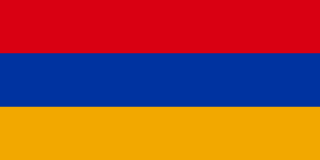
Discover
The identity of the nation
Armenia is a small nation located in the mountains of the South Caucasus, with about 3 million inhabitants and its capital in Yerevan. Surrounded by Turkey, Georgia, Azerbaijan, and Iran, it is an ancient land of high plateaus and valleys, where almost all the ground rises above one thousand meters. Its history, its language, and its own alphabet form an identity that has withstood centuries of foreign rule.
It holds a singular place in the history of the faith: in AD 301, Armenia became the first nation in the world to officially adopt Christianity, even before the Roman Empire. The Armenian Apostolic Church, founded according to tradition by the apostles Bartholomew and Thaddeus, is the oldest national church in the world and is woven into the very soul of the people. Over the centuries, being Armenian and being Christian became almost inseparable.
That faith was forged in trial. In the early twentieth century, the Armenian people suffered the genocide of 1915, in which about 1.5 million people were killed, a wound that marks the national memory to this day. Persecutions and massacres gave rise to a vast diaspora: today more Armenians live outside the country than within it, and Armenian churches abroad are centers of faith and cultural preservation.
Despite its ancient Christian name, Armenia carries real spiritual challenges. For many, faith is more cultural and identity-based than living and personal; the estrangement from religion inherited from the Soviet decades left its mark, and there are tensions between the traditional church and the evangelical communities, which are growing but still small. Unreached groups also persist, such as the Kurds and the Yazidis (followers of Yazidism, an ancient religion of Kurdistan) who live in Armenian territory.
Armenia is a nation that keeps a treasure: the memory of having been the first to bow before Christ. Today’s call is for that historic faith to burn again as living faith, for the ancient church to be renewed, and for the peoples still without the gospel within its borders to know salvation.
- Antiquity Armenian kingdoms flourish on the Caucasus plateau; under Tigranes II, the kingdom reaches its height in the 1st century BC.
- 301 Armenia adopts Christianity as its official religion, becoming the world's first Christian nation.
- 405 Mesrop Mashtots creates the Armenian alphabet, making it possible to record the Scriptures and the people's history.
- 451 At the Council of Chalcedon comes the separation that defines the distinct tradition of the Armenian Apostolic Church.
- 16th-19th cent. The territory is divided between the Ottoman and Persian empires, and later the Russian Empire.
- 1915 Armenian genocide: about 1.5 million people are killed in the Ottoman Empire; the great diaspora takes shape.
- 1922 Armenia is incorporated into the Soviet Union, with strong atheist pressure on the faith.
- 1991 Armenia becomes independent with the end of the Soviet Union.
- 2023 More than 100,000 Armenians leave the Nagorno-Karabakh region after Azerbaijan takes control.
- Today A nation of ancient Christian majority, marked by the memory of the genocide and by a faith seeking renewal.
-
Armenianofficial language, with its own alphabet created in AD 405, spoken by nearly the entire population
-
Russianwidely understood as a second language, a legacy of the Soviet period
-
Kurdish (Kurmanji)spoken by the country's Kurdish and Yazidi minority
-
Englishgrowing among young people and in tourism
Armenia is a mountainous, landlocked country in the South Caucasus. About 90% of the territory lies above one thousand meters in elevation. The highest point is Mount Aragats, at 4,090 meters. Mount Ararat, a historic symbol of the people and linked to the account of Noah's ark, now lies on the Turkish side of the border but remains visible from Yerevan. Lake Sevan, one of the largest high-altitude lakes in the world, sits at about 1,900 meters.
Major cities
- YerevanCapital and largest city, political and cultural center, one of the oldest inhabited cities in the world
- GyumriSecond-largest city, known for its architecture and cultural tradition
- VanadzorThird-largest, set among the northern mountains
- Echmiadzin (Vagharshapat)Spiritual seat of the Armenian Apostolic Church
Climate and temperature
Khorovats
Armenian barbecue of marinated lamb, beef, or chicken grilled over coals, present at every celebration.
Dolma
Grape or cabbage leaves stuffed with ground meat, rice, and spices, served with yogurt.
Lavash
Traditional thin bread baked in the tonir clay oven (a cylindrical clay oven sunk into the ground), recognized as cultural heritage by UNESCO.
Harissa
Thick porridge of wheat and chicken cooked slowly, tied to the Armenian people's memory of resistance.
Understand
Culture and spirituality
2a · The culture
Faith and identity intertwined
Being Armenian and being Christian merge throughout history; the church is guardian of the national memory.
Family at the center
Grandparents, uncles, and cousins live close by; the family is the heart of Armenian life.
Generous hospitality
Welcoming a visitor and sharing bread is a sign of honor and friendship.
Memory of the genocide
The tragedy of 1915 deeply shapes the people's consciousness and resilience.
Living diaspora
There are more Armenians outside the country than within; ties to the homeland are very strong.
Pride in the language and alphabet
The unique alphabet, created in 405, is a source of identity and devotion.
- Denying or downplaying the genocide of 1915 It is a central wound of the identity; treat it with respect and seriousness.
- Confusing Armenians with their Caucasus neighbors The language, faith, and history are unique and a source of pride.
- Treating the faith as mere folklore The ancient Christian heritage is taken seriously, even where personal faith is weak.
- Disdaining the hospitality offered Refusing shared bread or food comes across as an offense.
- Bringing up sensitive political topics carelessly Conflicts with neighboring countries are painful and current.
2b · The field
Areas of spiritual battle and cultural captivity to cover in prayer. Tap each point to understand:
Many call themselves Christians by heritage but have no living relationship with Christ.
National identity and faith blend, and religion becomes an ethnic symbol more than surrender to the Lord.
The unhealed pain of 1915 feeds resentment and hinders forgiveness.
Decades of atheist rule left estrangement from religion and spiritual distrust.
Tensions between the traditional church and the evangelical communities weaken the witness.
Rites repeated without understanding replace living faith in many places.
The constant departure of young people weakens families, churches, and communities.
Historical conflicts feed hostility that calls for reconciliation.
Poverty and instability lead to discouragement and to seeking security in things.
Kurds and Yazidis within the country remain without full access to the gospel.
Armenia is a Christian-majority nation, and Christians there do not face the open, violent persecution found in other countries. The pressure is instead internal and cultural: the faith is so tied to national identity and to the Armenian Apostolic Church that other Christian expressions, especially the evangelical communities, can be viewed with suspicion.
Leaders of evangelical churches report public hostility, accusations, and the label of sect from some quarters, which hinders growth and acceptance. Even so, there is freedom for worship and witness, and the environment is incomparably more open than that of many neighbors.
The sharpest suffering of the Armenian people in recent decades has come from regional conflicts, especially the exodus of more than 100,000 Armenians from Nagorno-Karabakh in 2023 and the destruction of ancient Christian churches and monuments in lost territory. The pain of this Christian people today is, above all, the pain of displacement and the loss of their heritage of faith.
The persecution score runs from 0 to 100: the higher it is, the greater the pressure on Christians.
Armenia is a nation of ancient Christian majority, but it still holds small unreached groups within its borders, above all the Kurdish minority and the Yazidis, who follow a religion of their own. There are also languages that do not yet have the Bible translated. The greatest challenge, however, lies not only in these peoples but in the renewal of living faith among the Armenians themselves, who have carried the Christian name for more than seventeen centuries.
- 60K Unreached 2,1%
- 0 Minimally reached 0%
- 177K Superficially reached 6,1%
- 0 Partially reached 0%
- 2.7M Significantly reached 91,8%
- 3 Unreached 30%
- 0 Minimally reached 0%
- 5 Superficially reached 50%
- 1 Partially reached 10%
- 1 Significantly reached 10%
Source of people group data: Joshua Project (joshuaproject.net). Estimates, may vary.
Azeri do norte
Yazidi
Persa
Source: Joshua Project. Estimates, may vary.
Pray
Intercede for this nation
Every nation carries a redemptive purpose. Marks that seem woven into the identity God desires to restore:
Go
Practical details for those who want to go
Local time
Cost of living
concentrated in Yerevan
Cost by city
Reference values (source: Numbeo). Confirm before traveling.
Practical points for those who go
- Learn a few words in Armenian: the language and alphabet are a source of pride and open doors.
- Russian is very useful: it is still widely understood as a second language.
- Bring clothes for the cold: winters in the mountains are harsh, with snow.
- Treat the genocide of 1915 with respect and sensitivity in conversation.
- Value the local hospitality: accepting shared bread and food builds bonds.
- Use the Armenian dram (AMD); cards work in Yerevan, but carry cash in rural areas.
Send and sustain
Not everyone goes, everyone takes part
Not everyone goes. Everyone takes part.
Behind every worker among these peoples stands a network of people who pray without ceasing, care for the family left behind, and faithfully sustain the work. Sending is mission too.
Start with your church: introduce this nation, adopt it in ongoing prayer, and walk alongside those God is raising up to go.