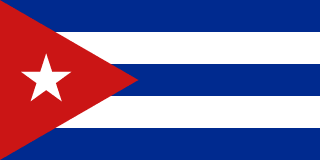
Discover
The identity of the nation
Cuba is the largest island in the Caribbean, just a few kilometers from Florida, home to roughly 11 million people. Its identity was born from the meeting of Spanish colonizers, indigenous peoples now practically extinct, and Africans brought as slaves. Out of that mixture came a vibrant culture of music, dance, poetry and human warmth that the whole world recognizes, from son to bolero, from mambo to salsa.
For centuries Catholicism was the official religion, a legacy of the colonial era. But Cuban faith is rarely simple: many baptized in the Catholic Church also practice Santeria, an Afro Cuban religion that fuses Catholic saints with the Yoruba orishas brought by the enslaved. It is estimated that a large share of the population turns, at some point, to these blended religious practices, seeking protection, healing or spiritual guidance.
The 1959 Revolution made Cuba an officially atheist state for decades, and faith was pushed to the margins. Churches were closed, Christians lost jobs and opportunities, and professing belief meant suspicion. Starting in the 1990s, with the Constitution declaring the country secular, some opening occurred, and Pope John Paul II’s 1998 visit marked a renewed encounter between the people and public religious expression.
Despite this apparent opening, living out one’s faith in Cuba still carries a cost. The government monitors worship services, makes it difficult to register new churches, and treats leaders who speak about justice as a threat. Even so, the evangelical church has grown, especially in homes, and there is genuine spiritual hunger among young people, tired of empty promises and drawn to something that offers meaning and hope.
Cuba is a nation of resilient, creative and deeply relational people, who have endured decades of scarcity and isolation. Beneath the surface of joyful music there are wounds: families separated by emigration, economic hopelessness and a spiritual void that neither the mix of religions nor ideology has filled. It is a land that needs to know the living Christ, not diluted in saints or silenced by fear.
- Before colonization, the Taino, Ciboney and Guanahatabey peoples inhabited the island.
- 1492 Christopher Columbus arrives in Cuba and claims the island for Spain.
- 16th-19th centuries Spanish colony; the indigenous population is decimated and Africans are brought as slaves to the sugar mills.
- 1898 Spanish American War; Spain loses control of the island to the United States.
- 1902 Cuba becomes an independent republic, under strong American influence.
- 1959 The Revolution, led by Fidel Castro, overthrows the government of Fulgencio Batista.
- 1961 Cuba declares itself a socialist state and aligns with the Soviet Union; the US embargo begins.
- 1998 Pope John Paul II's visit marks the reopening of public religious expression.
- Today A nation of nominal Christian majority, with a strong mix of religions, state control and growing spiritual hunger among the young.
-
Spanishofficial, spoken by practically the entire population
-
Haitian Creolespoken by communities descended from Haitian immigrants
-
Lucumiliturgical language of Yoruba origin, used in Santeria rituals
Cuba is the largest island in the Caribbean and the westernmost of the Greater Antilles, located about 145 km south of Florida. The territory is mostly flat and fertile, ideal for growing sugarcane and tobacco, but about a third is mountainous, with three major ranges: the Sierra de los Organos in the west, the Escambray in the center, and the Sierra Maestra in the southeast, home to the highest point, Pico Turquino, at 1,974 meters.
Major cities
- HavanaCapital and largest city, historic and cultural center
- Santiago de CubaSecond largest city, cultural and musical birthplace, in the southeast
- CamagueyMajor city in the center, known for its labyrinthine streets
- Santa ClaraCentral city, linked to the history of the Revolution
- TrinidadPreserved colonial city, a World Heritage site
Climate and temperature
Ropa vieja
Shredded beef cooked in a sauce of tomato, peppers and spices, the national dish.
Moros y cristianos
Rice cooked together with black beans, a classic side dish of the country.
Lechon asado
Pork marinated in garlic and sour orange mojo, slow roasted, a dish for celebrations.
Tostones
Twice fried green plantain slices, crispy, served with garlic and salt.
Flan
A custard of milk and eggs with caramel sauce, a much loved dessert.
Understand
Culture and spirituality
2a · The culture
Music at the center of life
From son to bolero, from salsa to mambo, music is the language of the Cuban soul.
Warmth and relational spirit
Cubans are warm, talkative and welcoming, valuing togetherness and closeness.
Mix of religions
Catholicism and Santeria coexist; many blend saints and orishas within the same faith.
Resilience and creativity
Faced with scarcity, the people have learned to improvise, repair and carry on.
Family and community
Family and neighborhood ties are strong, even with so many families separated by emigration.
- Discussing politics openly The topic is sensitive and can expose residents to risk with the authorities.
- Photographing official or military buildings It can be seen as a threat and cause problems.
- Treating poverty with pity or superiority Dignity and friendship matter more than charity.
- Generalizing the people by the state's ideology The ordinary Cuban is not the same as the regime.
- Speaking openly about faith in public Discretion protects local believers who live under surveillance.
2b · The field
Areas of spiritual battle and cultural captivity to cover in prayer. Tap each point to understand:
The Christian faith blends with Santeria and the worship of the orishas, diluting the gospel.
Decades of materialist doctrine have left many without spiritual reference.
The monitoring of worship and leaders breeds self censorship and restrains the church.
Prolonged scarcity feeds discouragement and disbelief in the future.
Devotion to the saint orishas competes with worship of the one true God.
The ideology and its leaders occupy the place of a near civil religion.
The search for a way out fragments homes and weakens communities.
Isolation limits access to resources and biblical teaching.
The daily struggle for basic goods can smother spiritual seeking.
The belief that nothing changes undermines hope and faith in transformation.
Cuba is among the countries where following Christ carries a real cost. The regime treats the church, especially when it serves the community or raises its voice for justice, as a threat to its interests. Christian leaders and activists face surveillance, intimidation, defamation campaigns, restrictions on movement and, in more serious cases, detention.
Authorities often deny registration to new churches, forcing many communities to operate informally, under greater risk of pressure. Fines, confiscation of property, demolitions and closures are tools used against congregations and Christian organizations. Sermons are frequently monitored to ensure alignment with state values.
Even so, the Cuban church, especially the house church movement, shows faithfulness and courage. Under pressure and scarcity, the desire for authentic faith grows, and intercessors must sustain it in prayer.
The persecution score runs from 0 to 100: the higher it is, the greater the pressure on Christians.
Cuba is ethnically quite integrated, with most of the population speaking Spanish and having nominal access to the gospel. Some groups remain less reached, however, such as immigrant communities and the most deeply rooted practitioners of Santeria, whose hearts remain bound to syncretism. The greatest challenge is not the absence of churches, but depth: leading many from a syncretic, nominal faith into a real encounter with Christ.
- 67K Unreached 0,6%
- 0 Minimally reached 0%
- 26K Superficially reached 0,2%
- 39K Partially reached 0,4%
- 10.7M Significantly reached 98,8%
- 2 Unreached 20%
- 0 Minimally reached 0%
- 2 Superficially reached 20%
- 1 Partially reached 10%
- 5 Significantly reached 50%
Source of people group data: Joshua Project (joshuaproject.net). Estimates, may vary.
Sul-Asiático
Deaf Frontier
Árabe
Chinês Han Mandarim
Source: Joshua Project. Estimates, may vary.
Pray
Intercede for this nation
Every nation carries a redemptive purpose. Marks that seem woven into the identity God desires to restore:
Go
Practical details for those who want to go
Local time
Cost of living
scarcity of goods is the biggest challenge
Cost by city
Reference values (source: Numbeo). Confirm before traveling.
Practical points for those who go
- Speak Spanish: English is rarely spoken outside tourist hubs.
- Bring cash: international cards work poorly and banking infrastructure is limited.
- Have patience with scarcity: basic goods are often lacking; plan ahead and bring the essentials.
- Be discreet about faith and politics: protect local believers, who live under surveillance.
- Prefer private homes for lodging and connecting with the people.
- Internet access is expensive and unstable; arrange contacts in advance.
Send and sustain
Not everyone goes, everyone takes part
Not everyone goes. Everyone takes part.
Behind every worker among these peoples stands a network of people who pray without ceasing, care for the family left behind, and faithfully sustain the work. Sending is mission too.
Start with your church: introduce this nation, adopt it in ongoing prayer, and walk alongside those God is raising up to go.