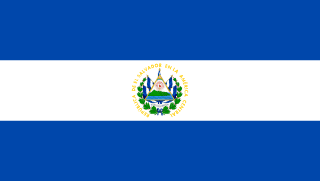
Discover
The identity of the nation
El Salvador is the smallest and most densely populated country in Central America, set among volcanoes and known as “the land of volcanoes” for the more than twenty cones that mark its landscape. Its people are warm, proud of their culture and their food, but they also carry the marks of decades of war and violence. Despite its small territory, the impact of its history and its diaspora reaches far beyond its borders.
The country lived through a bloody civil war between 1979 and 1992 that left around 75,000 people dead and deeply wounded families and communities. It was in this context that Archbishop Óscar Romero, today recognized by the Catholic Church as a martyr and saint, became a courageous voice in defense of the poor, until he was assassinated during Mass in 1980. After the war ended, the country faced decades of domination by violent gangs, which imposed fear on entire neighborhoods. A recent hardline security policy has drastically reduced crime rates, bringing real relief, even as it also raises debate over the limits of this kind of policy.
Amid this backdrop of suffering, the Christian faith plays a central role in the life of the Salvadoran people. Historic Catholicism, often marked by tradition and devotion to saints, has been losing ground to evangelical churches, which have grown greatly in recent decades and today represent the largest religious group in the country. Many of these churches were born precisely as a response to the pain of war and gang violence, offering community, hope and a different path for young people.
One of El Salvador’s most striking features is its diaspora: millions of Salvadorans live outside the country, mainly in the United States, and the money they send home sustains a large part of the national economy. This reality also shapes the church, which lives divided between those who stay and those who leave, and which finds in faith one of the few bonds that keep families united across the distance.
Today, the challenge for the Salvadoran church is to go beyond numerical growth: to form mature disciples, care for families fragmented by emigration and violence, and reach groups still forgotten, such as the country’s deaf community, which lacks a church that speaks its own language. The greater peace the country now enjoys opens a real window for the gospel to be proclaimed with more freedom and depth.
- 1500 BC First settlements in the region, with structures such as those at Tazumal, in Chalchuapa
- 6th-15th century Indigenous peoples such as the Pipil, Lenca and Pokomam settle in the territory
- 1524 Spanish conquistador Pedro de Alvarado invades the territory and faces strong resistance from the native peoples of Cuzcatlán
- 1525 Founding of the city of San Salvador by the Spanish
- 1811 Father José Matías Delgado rings the bells of a church in San Salvador, launching the movement for Central American independence
- 1821 Independence from Spain, together with the other Central American provinces
- 1841 El Salvador becomes an independent republic after the end of the federation with the other Central American countries
- 1979-1992 Civil war between the government and guerrilla groups, leaving around 75,000 dead
- 1980 Archbishop Óscar Romero is assassinated during Mass, after denouncing human rights violations
- 1992 Signing of the Chapultepec Peace Accords, ending the civil war
- 2001 The US dollar becomes the country's official currency
- 2021 El Salvador becomes the first country in the world to adopt bitcoin as legal tender
- Today A hardline security policy against gangs greatly reduces violence rates, bringing a new period of stability to the country
-
SpanishOfficial language, spoken by nearly the entire population
-
Nahuat (also called Pipil)A nearly extinct indigenous language, spoken by a few elderly people in the west of the country; there are recent efforts to teach it to new generations
-
Salvadoran Sign LanguageUsed by the country's deaf community
El Salvador is the only country in Central America without a coastline on the Caribbean Sea: its entire coast faces the Pacific Ocean. It is also the smallest country in the region by area, yet one of the most densely populated. Its territory is cut through by a chain of volcanoes, which earned it the nickname "land of volcanoes," and as a result earthquakes and volcanic activity are part of daily life. Between the mountains and the coast lie fertile plains, volcanic lakes and a tropical climate that varies more with altitude than with the seasons.
Major cities
- San SalvadorCapital and largest city, the country's political and economic center, surrounded by volcanoes
- Santa AnaSecond-largest city, near the volcano of the same name and Mayan archaeological sites
- San MiguelImportant commercial hub in the country's east, known for its traditional November festival
- Santa TeclaCity near the capital, with a milder climate due to its altitude
- SuchitotoColonial town on the shores of Lake Suchitlán, known for its art and culture
- La LibertadCoastal town famous for its Pacific surf beaches
Climate and temperature
Pupusa
National dish: a corn or rice cake filled with cheese, beans or pork, served with fermented cabbage slaw (curtido)
Yuca frita
Cassava that is boiled and then fried, served with crispy pork rinds (chicharrón) and tomato sauce
Tamal de elote
A cake made of sweet corn, cooked inside its own husk, in sweet or savory versions
Sopa de pata
A soup made with cow's foot, vegetables and corn, traditional on celebration days
Tamal pisque
A simple corn tamale filled only with beans, common at breakfast
Rigua
A fried cake of tender corn, sometimes wrapped in a banana leaf
Atol de elote
A hot, sweet drink made of ground corn, taken together with tamales
Chilate
A hot drink made from roasted corn, traditionally served with nuégados, sweet banana or cassava fritters covered in raw cane syrup
Understand
Culture and spirituality
2a · The culture
Pupusas
The country's signature dish, so important it even has a national day dedicated to it, in November
Ruta de las Flores
Mountain road linking towns full of colorful murals and weekend food fairs
Tazumal and Joya de Cerén Ruins
Mayan and Pipil archaeological sites; Joya de Cerén, recognized by UNESCO, preserves the daily life of a village buried under volcanic ash
Volcanoes
The country has more than twenty volcanic cones, which shape the landscape and give rise to the nickname "land of volcanoes"
Surf beaches
The Pacific coastline is one of the most sought-after surfing destinations in Central America
Indigenous crafts
A tradition of weaving and pottery in towns such as Nahuizalco and Ilobasco, inherited from the native peoples
- Talking about gangs or showing tattoos A sensitive topic that can generate mistrust or even real risk
- Photographing police, military or security checkpoints Can be seen as suspicious in a country under heavy policing
- Going out alone at night in unfamiliar areas Even with much-improved security, caution is still advised
- Swimming carelessly at Pacific beaches Ocean currents are strong and have already caused tourist drownings
- Making light comments about politics The topic divides opinions, given the country's recent history
- Carrying any marijuana-based product Penalties for drug possession are among the harshest in the world
2b · The field
Areas of spiritual battle and cultural captivity to cover in prayer. Tap each point to understand:
Decades of gang domination left deep marks on families and entire neighborhoods
Money sent by relatives in the United States fuels a desire for consumption that does not always bring satisfaction
Many call themselves Christians out of family heritage, without a personal, living relationship with God
Devotion to saints mixes with popular beliefs and practices of indigenous origin
Years of violence have shaped the way people trust or distrust one another
Cultural patterns that place women in a position of submission and, often, suffering
The search for security leads many to place almost absolute hope in strong leaders, rather than in God
The trauma of the armed conflict still echoes in divided families and memories of loss
Thousands leave the country in search of a better life, fragmenting entire families through emigration
Beliefs in amulets, folk healers and divination still coexist with the Christian faith
Part of the new generation is drifting away from both the traditional church and any faith at all
In El Salvador, religious persecution does not come from the state, but from the violence that for a long time ran through the daily life of communities. For years, gangs such as Mara Salvatrucha (MS-13) and Barrio 18 controlled entire neighborhoods, and pastors and Christian leaders who spoke out against organized crime, or tried to pull young people out of these gangs, became targets of threats, extortion and even murder.
Since the government adopted a state of exception to fight the gangs, violence levels have dropped drastically, bringing relief to many churches that had previously lived under constant extortion. Even so, families of people arrested in security operations face suffering and uncertainty, and the social pressure on those who try to break away from gang life remains real.
Young people in poor neighborhoods still face difficult choices: joining a gang, turning to an evangelical church that offers an alternative community, or trying to leave the country. Girls and women in vulnerable communities remain exposed to abuse and exploitation, and churches working in these neighborhoods often serve as a refuge and protective network for them.
The persecution score runs from 0 to 100: the higher it is, the greater the pressure on Christians.
El Salvador is an ethnically quite homogeneous country, but Joshua Project catalogs seven groups among its inhabitants: the large Salvadoran Mestizo majority, the Pipil people (descendants of the ancient Nahua), the Lenca, as well as small communities of German and American origin and the deaf community, which uses Salvadoran Sign Language. Only one of these groups, the deaf community, is considered unreached by the gospel, representing around 26,000 people without a relevant church in their own language and culture.
- 26K Unreached 0,4%
- 0 Minimally reached 0%
- 59K Superficially reached 0,9%
- 291K Partially reached 4,6%
- 5.9M Significantly reached 94%
- 1 Unreached 14,3%
- 0 Minimally reached 0%
- 2 Superficially reached 28,6%
- 2 Partially reached 28,6%
- 2 Significantly reached 28,6%
Source of people group data: Joshua Project (joshuaproject.net). Estimates, may vary.
Source: Joshua Project. Estimates, may vary.
Pray
Intercede for this nation
Every nation carries a redemptive purpose. Marks that seem woven into the identity God desires to restore:
Go
Practical details for those who want to go
Local time
Cost of living
Full plate meal at markets or diners
Cost by city
Reference values (source: Numbeo). Confirm before traveling.
Practical points for those who go
- The US dollar has been the official currency since 2001, so there is no need to exchange money.
- The country's time zone is UTC-6, with no daylight saving time.
- Bring light but modest clothing: shorts and tank tops are frowned upon in churches and formal settings.
- Prefer ride-hailing apps or trusted taxis over city buses at night.
- Avoid photographing police, military personnel and areas with a heavy security presence.
- Tap water is generally not safe to drink; prefer bottled water.
- Salvadorans value cordiality: greet with a handshake and address people as "señor" or "señora".
Send and sustain
Not everyone goes, everyone takes part
Not everyone goes. Everyone takes part.
Behind every worker among these peoples stands a network of people who pray without ceasing, care for the family left behind, and faithfully sustain the work. Sending is mission too.
Start with your church: introduce this nation, adopt it in ongoing prayer, and walk alongside those God is raising up to go.