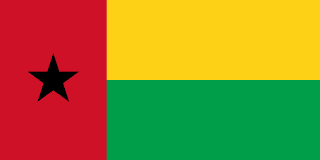
Discover
The identity of the nation
Guinea-Bissau is a small West African country, with about 2 million inhabitants, located between Senegal and Guinea, and facing the Atlantic. Its mainland territory of savannas and mangroves extends into the sea through the Bijagós Archipelago, with dozens of islands of untouched beaches and its own culture. The capital, Bissau, concentrates the political and economic life of a young nation, which gained independence from Portugal only in 1974.
It is one of the most diverse countries in Africa relative to its size: about thirty ethnic groups live together in a small territory, each with its own language and traditions. The Balanta, Fula, Mandinka, Manjaco and Papel are among the largest. To understand one another, Guineans adopted Portuguese-based Creole as the everyday lingua franca, while Portuguese remains the official language and the language of school.
In matters of faith, Guinea-Bissau is one of the most religiously plural nations on the continent. Islam predominates, especially among the Fula and Mandinka of the interior. Traditional ethnic religions, tied to the worship of ancestors and spirits, remain extremely strong, especially among the Balanta, Papel and the Bijago people. Christianity, mainly Catholic, is present in the cities and along the coast, and is a minority throughout the country.
Coexistence among these three currents is generally peaceful, and open religious persecution is low. The greatest spiritual challenge is not hostility but the mixing of religions: professed faith blends with the worship of spirits and ancestral practices, so that many live between two worlds. Much of the ethnic groups still have no local church rooted in their own language.
Guinea-Bissau still bears the marks of political instability and poverty, but its people are resilient, hospitable and deeply communal, making music and celebration an essential part of life. It is a nation still waiting for the gospel to reach, with clarity and in the language of the heart, many of its peoples.
- 15th century Portuguese navigators reach the coast; the region becomes a hub of Atlantic trade.
- 16th-19th centuries Portuguese Guinea is an intense stage for the trafficking of enslaved people to the Americas.
- 1956 Amílcar Cabral and companions found the PAIGC, which leads the independence struggle.
- 1963 The war of liberation against Portuguese colonial rule begins.
- 1973 Cabral is assassinated in Conakry; months later the PAIGC declares independence.
- 1974 After the Carnation Revolution, Portugal recognizes the independence of Guinea-Bissau.
- 1980 Nino Vieira's coup ushers in decades of political and military instability.
- 1998-1999 Civil war devastates Bissau and deepens the country's crisis.
- Today A young, poor and diverse nation, marked by instability and by many peoples still unreached.
-
Portugueseofficial, the language of school, government and documents
-
Guinea-Bissau CreolePortuguese-based lingua franca, spoken by the majority in daily life
-
Ethnic languagesBalanta, Fula, Mandinka, Manjaco, Papel and dozens of other languages
Guinea-Bissau occupies a strip of low-lying land on the coast of West Africa, between Senegal and Guinea. The terrain is nearly flat, a vast plain of savannas and mangroves cut by wide rivers such as the Geba and the Cacheu, whose tides reach up to a hundred kilometers inland. Off the coast, the Bijagós Archipelago gathers about eighty islands with some of the most beautiful beaches in the region.
Major cities
- BissauCapital and largest city, political and economic center
- GabúHub of the eastern interior, a majority Muslim region
- BafatáHistoric city on the banks of the Geba River
- BolamaFormer capital, on the coast near the islands
- Bijagós ArchipelagoIslands of untouched beaches and their own culture
Climate and temperature
Caldo de mancarra
Peanut stew with fish or meat and rice, the country's national dish.
Jollof rice
Rice cooked with palm oil, tomato and onion, dark and smoky, served with fish or meat.
Caldo de chabéu
Stew made with red palm oil, with fish and vegetables over rice.
Cashew
Fruit abundant at harvest time, eaten fresh or as juice; the nut is the country's main export product.
Seafood
Plentiful along the coast and the Bijagós Islands.
Understand
Culture and spirituality
2a · The culture
Mosaic of peoples
About thirty ethnic groups live together in a small territory, each with its own language and traditions.
Creole unites
Portuguese-based Creole functions as a bridge between ethnic groups that cannot understand each other in their native languages.
Community life
The extended family and the village, the tabanca, are the center of identity and survival.
Music and gumbe
Gumbe fuses African and Portuguese rhythms; music and dance mark every moment of life.
Bissau Carnival
One of the country's greatest cultural expressions, bringing together groups from across the territory and the islands.
The Bijago
On the islands, society is matrilineal and deeply connected to the sea, nature and initiation rites.
- Treating poverty with pity or superiority Dignity and partnership matter more than charity.
- Ignoring elders and village hierarchy Respect for elders and local leaders opens doors.
- Dismissing Creole Learning the everyday language earns trust and closeness.
- Generalizing the peoples Each ethnic group has distinct faith, customs and sensitivities; treating them all as the same offends.
- Being cold or rushed Personal relationship and time for conversation come before any subject.
2b · The field
Areas of spiritual battle and cultural captivity to cover in prayer. Tap each point to understand:
Devotion to the spirits of the dead governs decisions, harvests and rites for much of the population.
Fear of spirits and the search for mystical protection shape daily life in many villages.
Professed faith, whether Christian or Muslim, blends with traditional rites, diluting the gospel.
Secret ceremonies seal ethnic identity and bind generations to spiritual traditions.
Decades of coups and crises have eroded trust and hope for the future.
The fragility of institutions fuels abuse of power and injustice.
Material need leaves entire communities without access to education, health care and the gospel.
Many ethnic groups still have no church rooted in their language and culture.
Resignation in the face of suffering stifles hope and the pursuit of change.
The coastal position exposes the country to crime networks that corrupt and harm.
Guinea-Bissau is a country of remarkable religious tolerance, where Muslims, Christians and followers of traditional religions generally coexist peacefully. Freedom of worship is respected, and open persecution of Christians is low, without systematic hostility from the state or society.
The greatest challenge does not come from external pressure but from the spiritual environment. In many communities, leaving the traditional religion or Islam to follow Christ can bring rejection from family and village, loss of ties, and exclusion from the rites that define the group’s identity. The pressure is more social and familial than legal.
The mixing of religions is the deepest obstacle: the worship of ancestors and fear of spirits remain alive even among those who call themselves Christian or Muslim. The great challenge is for the gospel to reach, with clarity and in the mother tongue, peoples who have not yet had the opportunity to know it.
The persecution score runs from 0 to 100: the higher it is, the greater the pressure on Christians.
Guinea-Bissau is home to about thirty peoples, and more than half of them are considered unreached. The Balanta, Manjaco, Papel and the Bijago people remain mostly in traditional religions, while the Fula and Mandinka are predominantly Muslim. Christianity is concentrated among the Creole people and in the cities. Many of these groups still have no church rooted in their language, and dozens of languages still lack a complete Bible.
- 1.1M Unreached 48,3%
- 100K Minimally reached 4,6%
- 0 Superficially reached 0%
- 1M Partially reached 47,1%
- 1K Significantly reached 0%
- 16 Unreached 55,2%
- 4 Minimally reached 13,8%
- 0 Superficially reached 0%
- 8 Partially reached 27,6%
- 1 Significantly reached 3,4%
Source of people group data: Joshua Project (joshuaproject.net). Estimates, may vary.
Soninke Frontier
Mandingo
Balanta, Ganja
Badyara
Jahanka Frontier
Nalu
Maninka Ocidental
Source: Joshua Project. Estimates, may vary.
Pray
Intercede for this nation
Every nation carries a redemptive purpose. Marks that seem woven into the identity God desires to restore:
Go
Practical details for those who want to go
Local time
Cost of living
one of the poorest countries in the world
Cost by city
Reference values (source: Numbeo). Confirm before traveling.
Practical points for those who go
- Learn Creole: it is the everyday language and opens doors where Portuguese does not reach.
- Get the yellow fever vaccine: it is often required on entry and essential in the region.
- Protect yourself against malaria: the disease is endemic; use protection and prophylaxis.
- Be patient with infrastructure: power, water and roads are limited outside Bissau.
- Carry cash: cards and ATMs are rare outside the capital.
- Respect elders and local leaders: village hierarchy is the path to trust.
Send and sustain
Not everyone goes, everyone takes part
Not everyone goes. Everyone takes part.
Behind every worker among these peoples stands a network of people who pray without ceasing, care for the family left behind, and faithfully sustain the work. Sending is mission too.
Start with your church: introduce this nation, adopt it in ongoing prayer, and walk alongside those God is raising up to go.