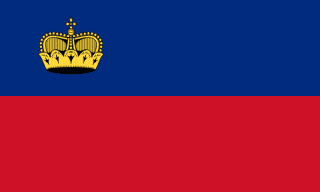
Discover
The identity of the nation
Tucked into the Alps between Switzerland and Austria, Liechtenstein is one of the smallest countries in the world: a principality of just over 160 square kilometers with about 40 thousand inhabitants, ruled by a reigning prince who still lives in the castle overlooking the capital, Vaduz. Despite its size, it is one of the wealthiest nations on the planet, sustained by a strong financial sector and industries that export high-precision products worldwide.
The Catholic faith is woven into centuries of the country’s history and is still recognized in the Constitution as the state church, but this heritage now coexists with growing secularization. For many residents, Christianity is part of a cultural identity passed down by the family, not a personal faith lived out day to day. Evangelicals are a very small minority, and living, committed Christian communities are still rare.
Wealth is both a blessing and one of the country’s greatest spiritual challenges. High salaries, stability and comfort make it easy to live without feeling any need for God. It is a miniature portrait of a challenge many wealthy Western nations face: how to bring the gospel to people who seem to lack nothing.
Thousands of workers come from Switzerland and Austria every day to work in Liechtenstein, and other families have moved in to live in the country, forming small immigrant communities, among them Muslim Turks and Tibetans linked to Buddhism. These families live surrounded by prosperity, but with little or no contact with a living, genuine Christian faith.
Liechtenstein also holds a rare Christian musical heritage: the composer Josef Gabriel Rheinberger, born in Vaduz, devoted much of his work to masses and sacred music still performed in churches around the world. Praying for this small nation means asking that the faith that once inspired such beauty would once again touch the hearts of its people, from the wealthiest to those who came from abroad seeking a better life.
- Centuries earlier, the territories of Vaduz and Schellenberg are part of the Holy Roman Empire, under the rule of different noble families.
- 1648-1682 Waves of witch hunts hit the region, leading to the execution of about 200 people, one of the highest per capita rates in Europe.
- 1699 The House of Liechtenstein buys the lordship of Schellenberg.
- 1712 The House of Liechtenstein buys the county of Vaduz.
- 1719 Emperor Charles VI unites the two territories and officially creates the Principality of Liechtenstein.
- 1806 The country becomes sovereign upon joining the Confederation of the Rhine, leaving the old empire.
- 1868 The principality disbands its small army and adopts permanent neutrality, taking part in no wars since.
- 1938 Prince Franz Josef II begins residing permanently in Vaduz, strengthening national identity and life.
- 1984 Women win the right to vote in national elections, one of the last nations in Europe to grant this right.
- 1990 The country joins the United Nations.
- Today One of the wealthiest nations in the world per capita, with deep Catholic roots and a faith increasingly cultural rather than lived.
-
Standard Germanofficial language, used in government, schools and the media
-
Alemannic dialectform spoken daily by nearly the entire population, with variations from valley to valley
-
Walser (Alpine German)dialect preserved by a small community descended from medieval settlers, in the Triesenberg region
-
Italian, Turkish and other languagesspoken by immigrant families who came to work in the country
-
Englishused mainly in business and the international financial sector, but far less common than German in daily life
Liechtenstein is one of the smallest countries in the world, tucked into the Alps between Switzerland to the west and Austria to the east. It is one of only two doubly landlocked countries on the planet, meaning it is surrounded only by countries that are themselves landlocked (the other is Uzbekistan). The Rhine River runs along the entire western border, marking the valley where most of the population lives, while the eastern side is dominated by mountains rising above 2,500 meters. With just over 160 square kilometers, an area smaller than many cities, the country is divided into 11 municipalities.
Major cities
- VaduzCapital, seat of government and the castle where the reigning prince lives
- SchaanThe country's largest municipality, main industrial and commercial center
- TriesenThird largest town, known for its farming tradition and vineyards
- BalzersTown at the southern tip, on the border with Switzerland, marked by Gutenberg Castle
- TriesenbergMountain municipality settled by Walser immigrants, which preserves its own dialect
Climate and temperature
Käsknöpfle
Small flour and egg dumplings topped with melted cheese and fried onions, the country's most traditional dish
Ribel
Cornmeal and wheat porridge toasted in butter, served at breakfast with milk or fruit compote
Hafalaab
Soup with small wheat and corn dumplings, seasoned with smoked bacon
Geschnetzeltes
Thinly sliced veal in a creamy sauce, served with rösti, a crispy grated potato cake
Kratzer
Sweet pancake shredded into pieces, similar to the Austrian Kaiserschmarrn, served as a dessert
Dreikönigskuchen
Sweet cake with raisins and chocolate chunks, traditionally made for Epiphany, in January
Understand
Culture and spirituality
2a · The culture
Alpine and Germanic heritage
The culture blends traditions of German speaking Alpine peoples with a strong sense of its own identity, even with its tiny territory.
Small community life
With only a few thousand inhabitants, almost everyone knows each other; reputation and personal relationships carry more weight than in large countries.
Bond with the reigning house
The prince still lives in the castle overlooking Vaduz and keeps an active role in the nation's public and symbolic life.
Catholic heritage
Centuries of Catholic tradition have shaped festivals, calendar and customs, even as faith today is more formal than lived out daily.
Discretion and reserve
The culture values privacy and discretion, including in financial and personal matters.
A more diverse society than it appears
Workers from dozens of countries come to work in Liechtenstein every day, making society more diverse than the country's size suggests.
- Confusing the country with Switzerland or Austria Residents value their own identity, even while sharing language and landscape with their neighbors.
- Reducing the country to a "tax haven" Seeing the nation only through its banks and low taxes ignores its culture, faith and history.
- Being too loud or informal Discretion and formality are valued in social dealings, especially with strangers.
- Assuming wealth means there is no spiritual need Material prosperity conceals a faith that is more cultural than personal and living.
- Ignoring the immigrants A good share of those who live and work in the country were born elsewhere; treating everyone as a traditional local erases this reality.
- Joking about the country's size Locals sometimes joke about it themselves, but coming from a foreigner it can sound mocking.
2b · The field
Areas of spiritual battle and cultural captivity to cover in prayer. Tap each point to understand:
Prosperity and material comfort occupy, in the hearts of many, the place that belongs only to God.
Many call themselves Christian out of family custom, without a personal faith lived out day to day.
With each generation, fewer people practice their faith or seek meaning in religion.
The local culture's extreme discretion makes deep community and church relationships difficult.
The country's tradition of banking secrecy can feed greed and conceal dishonesty.
Wealth and stability make it hard for many to recognize their need for God.
Centuries of church and state ties have left a faith more institutional than transformative.
Foreign workers from dozens of countries live in isolation, without a Christian community to welcome them.
The small Tibetan community keeps practices tied to Buddhism, with no reported Christian witness.
The Turkish community, mostly Muslim, is growing in the country with almost no contact with a living Christian faith.
Christians in Liechtenstein enjoy full freedom to gather, profess their faith and speak openly about Jesus, with no risk of legal persecution or violence.
The Catholic Church is still recognized in the Constitution as the state church, which grants it privileges that other Christian traditions, including evangelicals, do not have in the same way; even so, in practice, relations between the different Christian traditions are peaceful.
The greatest challenge does not come from outside, but from within: indifference. For many residents, the Christian faith is part of their cultural identity and family tradition, but not a personal commitment lived out day to day. Material wealth and a busy pace of life leave little room to seek God.
Muslim immigrant communities and other religious communities also have guaranteed freedom to profess their faith and face little or no formal discrimination, although, as minorities, they sometimes feel distant from the traditionally Christian society around them.
The persecution score runs from 0 to 100: the higher it is, the greater the pressure on Christians.
Liechtenstein is tiny, but Joshua Project identifies 8 different ethnic groups within its borders, most of them descended from German speaking peoples (Liechtensteiners, Germans, Swiss Germans and Walsers), historically linked to Christianity, even if today more nominal than lived. Amid this majority, two groups are considered unreached: the Turkish community, mostly Muslim, and the small Tibetan community, linked to Buddhism, present in the country since the 1970s. Together, they number about 1,600 people with little or no Christian witness around them, living side by side with one of the wealthiest populations in the world.
- 2K Unreached 4%
- 0 Minimally reached 0%
- 38K Superficially reached 96%
- 0 Partially reached 0%
- 0 Significantly reached 0%
- 2 Unreached 25%
- 0 Minimally reached 0%
- 6 Superficially reached 75%
- 0 Partially reached 0%
- 0 Significantly reached 0%
Source of people group data: Joshua Project (joshuaproject.net). Estimates, may vary.
Tibetan Frontier
Turco Frontier
Source: Joshua Project. Estimates, may vary.
Pray
Intercede for this nation
Every nation carries a redemptive purpose. Marks that seem woven into the identity God desires to restore:
Go
Practical details for those who want to go
Local time
Cost of living
one of the highest in Europe, similar to Switzerland's
Cost by city
Reference values (source: Numbeo). Confirm before traveling.
Practical points for those who go
- The currency is the Swiss franc: Liechtenstein has no currency of its own and uses the same money as Switzerland.
- German is essential: English is far less common here than in other small European countries.
- Distances are minimal: you can cross the country from end to end by car in under an hour.
- Many people commute in to work: thousands of people come from Switzerland and Austria every day just to work.
- Respect the discretion: direct questions about money or work can come across as intrusive.
- Trains do not enter the country: to arrive by train, get off in Sargans, Switzerland, or Feldkirch, Austria, and continue by bus.
- Few evangelical churches: finding a local evangelical community may require looking in neighboring towns in Switzerland or Austria.
- Catholic holidays are observed: many shops close on traditional holy days, even for those who do not practice the faith.
Send and sustain
Not everyone goes, everyone takes part
Not everyone goes. Everyone takes part.
Behind every worker among these peoples stands a network of people who pray without ceasing, care for the family left behind, and faithfully sustain the work. Sending is mission too.
Start with your church: introduce this nation, adopt it in ongoing prayer, and walk alongside those God is raising up to go.