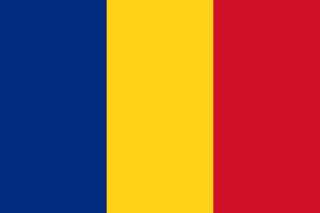
Discover
The identity of the nation
Romania is a country in southeastern Europe, with landscapes ranging from the Carpathian Mountains to the beaches of the Black Sea. Its language and even the country’s name come from the Latin heritage left by the Romans, who conquered ancient Dacia nearly two thousand years ago and mixed with the local peoples, giving rise to the Romanian people and language.
The vast majority of the population identifies as Orthodox Christian, a faith deeply tied to national identity: churches, monasteries and icons are part of the landscape and everyday life. But much of that faith is inherited and cultural, lived more as family tradition than as a personal relationship with God. It is in that space, between visible religiosity and the search for a gospel that truly transforms, that the Romanian evangelical church, still small, grows with difficulty.
The country carries deep marks from decades of communism, when churches were watched, pastors imprisoned and the Christian faith reduced to the private sphere. The fall of the regime in 1989 brought religious freedom, but also left behind a society marked by distrust between people, corruption in public institutions and a wave of emigration that emptied entire villages, as millions of Romanians went abroad to find work in other European countries.
Within this reality, groups such as the Roma people (popularly known as Gypsies), historically rejected and pushed to the margins of society, remain almost without access to a church that truly welcomes them. Small ethnic and religious minorities, such as Turks and Crimean Tatars (a Muslim people of Turkic origin who have lived in the region for centuries), also remain practically without relevant Christian witness among them.
Even so, Romania holds a history of persevering faith: it was home to pastors who resisted communist persecution without denying Christ, and today it is called to carry that same courage forward, both within its borders and beyond them, as a bridge between Eastern and Western Christianity.
- Before the arrival of the Romans, the territory was inhabited by the Dacians, a people of Thracian origin with their own culture and organization.
- 106 The Roman emperor Trajan conquers Dacia, which becomes a province of the Roman Empire; the mixing of Dacians and Romans gives rise to the Romanian people and language.
- 3rd-14th centuries Successive waves of peoples (Goths, Huns, Slavs) cross the region; centuries later, the principalities of Wallachia and Moldavia emerge.
- 15th-19th centuries The Romanian principalities come under the rule or strong influence of the Ottoman Empire for about 400 years.
- 1859 Union of the principalities of Wallachia and Moldavia, forming the core of the future Romanian state.
- 1877 Romania declares independence from the Ottoman Empire, recognized in 1878 by the Treaty of Berlin.
- 1918 The union with Transylvania forms "Greater Romania".
- 1947 End of the monarchy; establishment of a communist regime under Soviet influence.
- 1965-1989 Communist dictatorship of Nicolae Ceaușescu, marked by political repression and tight control over the churches.
- 1989 A popular revolution overthrows the communist regime.
- 2007 Romania joins the European Union.
- Today A member country of the European Union and NATO, majority Orthodox, with a small but slowly growing evangelical church.
-
Romanianofficial language, of Latin origin, spoken by about 90% of the population
-
Hungarianspoken by the Hungarian minority, concentrated mainly in Transylvania
-
Romanilanguage of the Roma people (Gypsies), spoken by part of that community
-
Germanspoken by small communities of Saxon origin in Transylvania
Romania lies in southeastern Europe and has quite varied geography for a mid-sized country. The Carpathian Mountains cross the territory in an arc, separating the Transylvanian plateau in the center from the fertile plains of Wallachia and Moldavia. The Danube River forms much of the southern border before flowing into the Black Sea to the east, where the country's most popular beaches are found.
Major cities
- BucharestCapital and largest city, the country's political and economic center
- Cluj-NapocaUniversity and tech hub in the Transylvania region
- TimișoaraHistoric city in the west of the country, where the 1989 revolution began
- BrașovMedieval city at the foot of the Carpathians, one of the most visited tourist destinations
- ConstanțaThe country's main port, on the Black Sea
- IașiCultural and university center in the historic Moldavia region
Climate and temperature
Sarmale
Cabbage or grape leaf rolls stuffed with ground meat and rice, the country's most traditional dish.
Mici
Grilled ground meat rolls seasoned with garlic and spices, served with mustard; a very popular street food.
Mămăligă
Cooked cornmeal polenta, used in place of bread in many everyday meals.
Papanași
Fried doughnuts made with fresh cheese, served warm with sour cream and homemade jam.
Understand
Culture and spirituality
2a · The culture
Hospitality and generosity
Romanians value welcoming guests well, with tables full of food.
Strong attachment to tradition
Folk festivals, traditional dress and folk music remain alive, especially in rural areas.
Faith and religiosity visible in daily life
Churches, icons and religious holidays are part of the routine, even among those who practice little of the faith.
A mix of historical influences
The culture combines Latin, Slavic and Ottoman roots, the fruit of centuries of coexistence among different peoples.
Emphasis on the extended family
Bonds between generations and respect for elders hold a central place in social life.
- Reducing the country to vampire or "Dracula" stereotypes This is seen as a touristy caricature and bothers part of the population.
- Confusing Romanians with the Roma people (Gypsies) or generalizing about them They are distinct peoples and identities; generalizing comes across as prejudiced.
- Openly criticizing the Orthodox Church It is central to national identity; direct criticism can sound disrespectful of the culture.
- Declining food or drink offered by hosts Hospitality is taken seriously, and declining can be misread.
2b · The field
Areas of spiritual battle and cultural captivity to cover in prayer. Tap each point to understand:
Many call themselves Orthodox Christians out of cultural and family heritage, without a personal, living relationship with God.
Beliefs in curses, amulets and charms still persist in rural areas, even among baptized people.
Distrust in institutions and corruption in government fuel discouragement and social cynicism.
Millions of Romanians have left the country seeking work, emptying families, villages and churches.
The Roma people (Gypsies) suffer rejection and exclusion, which makes access to the gospel even harder for them.
Historical distrust between Orthodox and evangelicals hinders cooperation and joint Christian witness.
Excessive alcohol consumption is common in several regions and affects entire families.
Decades of surveillance and informing left a distrust that still makes community life difficult.
The pursuit of prosperity after years of scarcity fuels consumerism and individualism.
Practices such as fortune telling and folk healing still attract those seeking answers outside the Christian faith.
In Romania, religious freedom is guaranteed by law, and violent persecution against Christians, as seen in other parts of the world, is not a reality in the country. The bigger challenge is different: social and family pressure on those who leave the Orthodox Church, a tradition deeply tied to national identity, to follow an evangelical faith. Those who make that change may face rejection from family, unkind comments from neighbors and even difficulties at work, especially in small towns and rural areas, where community life revolves around the traditional church.
Religious and ethnic minorities, such as Turkish and Tatar Muslims, and especially the Roma people (Gypsies), face prejudice that makes access to the gospel even harder, adding social stigma to spiritual distance. The marks of communist repression, when faith was closely watched by the state, also left a distrust that, decades later, still makes some communities wary of churches outside the traditional model.
The persecution score runs from 0 to 100: the higher it is, the greater the pressure on Christians.
Romania has 21 catalogued people groups, and the vast majority of the population belongs to peoples already reached by the gospel, chiefly the majority Romanian people. Even so, six groups are considered unreached: small ethnic or religious minorities, such as Turks, Tatars (including those from Crimea and the Nogai region), the Romanian Jewish community and the country's Deaf community, which together make up a small but real share of the population without a church of their own that is relevant to them.
- 86K Unreached 0,5%
- 0 Minimally reached 0%
- 93K Superficially reached 0,5%
- 18.5M Partially reached 99%
- 0 Significantly reached 0%
- 6 Unreached 28,6%
- 0 Minimally reached 0%
- 5 Superficially reached 23,8%
- 10 Partially reached 47,6%
- 0 Significantly reached 0%
Source of people group data: Joshua Project (joshuaproject.net). Estimates, may vary.
Judeu romeno Frontier
Tatar, Nogai Frontier
Tártaro
Turco Frontier
Tártaros da Crimeia
Deaf Frontier
Cigano balcã
Source: Joshua Project. Estimates, may vary.
Pray
Intercede for this nation
Every nation carries a redemptive purpose. Marks that seem woven into the identity God desires to restore:
Go
Practical details for those who want to go
Local time
Cost of living
one of the cheapest countries in the European Union
Cost by city
Reference values (source: Numbeo). Confirm before traveling.
Practical points for those who go
- Learn a few words in Romanian: English is common among young people in the cities, but not widely spoken in rural areas.
- Pack clothes for all four seasons: winters are harsh and summers can be quite hot.
- Respect Orthodox church customs: dress modestly and discreetly when visiting monasteries and churches.
- Prefer trusted taxis or ride-hailing apps: avoid unmarked cars offering rides.
- Be patient with bureaucracy: administrative processes can be slow, a legacy of the long communist period.
Send and sustain
Not everyone goes, everyone takes part
Not everyone goes. Everyone takes part.
Behind every worker among these peoples stands a network of people who pray without ceasing, care for the family left behind, and faithfully sustain the work. Sending is mission too.
Start with your church: introduce this nation, adopt it in ongoing prayer, and walk alongside those God is raising up to go.