Discover
The identity of the nation
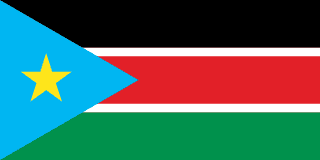
South Sudan is the newest country in the world: it became independent from Sudan in 2011, after decades of war. It is a young nation trying to build a shared identity among more than 60 ethnic groups, each with its own language, customs and history of suffering and resilience.
Most of the population identifies as Christian, and the church was often the only institution that kept functioning during the years of war, offering shelter, food and hope to displaced families. But this still young Christian faith often exists side by side with ancient practices of ancestor and spirit worship, and believing in Jesus does not always mean abandoning the fear of curses and witchcraft.
Among pastoralist peoples such as the Dinka, the Nuer and the Mundari, cattle hold an almost sacred place: they define a person’s worth, pay the bride price for marriage, and are the cause of armed conflicts between neighboring communities. Among the Muslim Arab peoples, who live mainly near the border with Sudan, the gospel has barely arrived, and following Jesus can mean losing family and community.
The country still bears the scars of a civil war that, between 2013 and 2018, killed nearly 400,000 people and displaced millions more. Today, South Sudan faces one of the largest displacement crises in Africa, with families living in refugee camps inside and outside the country, depending on humanitarian aid to survive.
Even so, this is a people who sing, dance and celebrate life even amid pain, and who carry enormous potential to bring the gospel to their own neighbors and to the still unreached communities within their borders. To pray for South Sudan is to pray for healing, for reconciliation between wounded ethnic groups, and for a church that deepens its faith beyond inherited tradition.
- Nilotic peoples such as the Dinka and the Nuer have settled the region for centuries, living off cattle herding along the Nile River
- 1899 The region becomes part of the Anglo-Egyptian Condominium, a period of joint administration of Sudan by the United Kingdom and Egypt
- 1955 On the eve of Sudan's independence, the First Sudanese Civil War begins, driven by the south's pursuit of autonomy
- 1972 The Addis Ababa Agreement ends the conflict for a time and grants regional autonomy to the south of the country
- 1983 The Second Sudanese Civil War begins, after the central government tries to impose Islamic law on the south as well, which is mostly Christian and traditional in religion
- 2005 The Comprehensive Peace Agreement ends the civil war and provides for a referendum on southern independence
- 2011 On July 9, South Sudan becomes the newest country in the world, after 98.8% of voters choose independence in a referendum
- 2013 A political dispute within the government turns into a civil war between rival ethnic groups, leaving nearly 400,000 dead by 2018
- 2018 A peace agreement officially ends the most intense fighting and provides for the formation of a unity government
- 2020 A transitional national unity government is formed, still working to fully meet the terms of the peace agreement
- Today The country faces localized violence between armed groups, one of the worst displacement crises in Africa, and heavy dependence on humanitarian aid
-
Englishofficial language, used in government and schools, but spoken as a mother tongue by few people
-
Juba Arabica simplified mix of Arabic that serves as a common language among speakers of different ethnic groups, especially in the capital
-
Dinkalanguage of the country's largest ethnic group, spoken mainly in the center and east
-
Nuersecond largest ethnic language, spoken mostly in the northeast, near the border with Ethiopia
-
Zande (also called Azande)spoken in the southwest, near the border with the Democratic Republic of the Congo
-
Barispoken in the region around the capital, Juba
-
Shillukspoken along the White Nile, in the north of the country
South Sudan is a landlocked country in east central Africa, bordered by Sudan to the north, Ethiopia to the east, Kenya and Uganda to the south, and the Democratic Republic of the Congo and the Central African Republic to the west. The Nile River runs through the territory from south to north, and around it formed the Sudd, one of the largest swamps in the world: a vast area of water, channels and aquatic vegetation that covers much of the country's center. To the north, the landscape is dry savanna with thorn trees; to the south, it gives way to greener savannas and areas of tropical forest, home to elephants, giraffes and one of the largest populations of migratory antelope in the world.
Major cities
- JubaCapital and largest city of the country, on the banks of the Nile River, the political and commercial hub
- WauSecond largest city, an important agricultural and railway hub in the northwest
- MalakalRiver port on the White Nile, capital of Upper Nile state
- BorCattle trade and agriculture hub, capital of Jonglei state
- YeiAgricultural town near the border with Uganda, known for coffee growing
Climate and temperature
Kisra
Thin, lightly fermented flatbread made from sorghum or corn, used to scoop up stews at almost every meal
Asida
Thick porridge of corn or sorghum flour, shaped into balls and served with peanut or meat stew
Peanut stew
A stew based on ground peanuts, which gives flavor and body to many of the country's dishes
Bamia
Okra stew cooked in tomato sauce, usually with beef or goat, served with kisra or asida
Ful medames
Slow-cooked fava bean stew, common at breakfast, eaten with bread
Cow's milk
For pastoralist peoples such as the Dinka, the Nuer and the Mundari, milk from their own cattle is a central part of daily food
Understand
Culture and spirituality
2a · The culture
Cattle culture
For pastoralist peoples such as the Dinka, the Nuer and the Mundari, cattle are more than wealth: they are part of identity, used in marriages, rituals and even in people's names
Ritual marks
In several ethnic groups, young people receive scars or undergo other body markings as part of coming of age ceremonies
Oral tradition
Stories, genealogies and proverbs are passed down from generation to generation through speech and song, since much of the population never had access to writing
Music and dance
Songs accompanied by drums and cattle horns mark almost every celebration, from birth to mourning
Cattle camps
At dusk, families take their cattle to open camps along riverbanks, where they sleep beside the animals to protect them
Hospitality
Welcoming a visitor with food and a place to rest is considered a sacred duty, even in families with few resources
- Directly asking about someone's ethnicity The topic can reopen wounds from years of conflict between ethnic groups; it is better to let the person bring it up on their own
- Photographing people or cattle without asking permission Many communities, especially pastoralist ones, consider this invasive
- Refusing food or drink that is offered Refusing hospitality is seen as a serious disrespect to the host
- Pointing with the foot or toes at someone This is considered extremely rude in many local cultures
- Talking about the civil war lightly Almost every family lost someone in the conflict, so the topic requires sensitivity
- Using the left hand to hand something over or to eat It is considered the "unclean" hand in many local traditions
- Cutting the long traditional greetings short Greetings can take minutes, and skipping this step is seen as coldness
2b · The field
Areas of spiritual battle and cultural captivity to cover in prayer. Tap each point to understand:
In several peoples, healers and diviners are consulted to explain illness and misfortune, instead of turning to God
Many families make offerings and perform rituals to please the spirits of their ancestors and avoid their wrath
Cycles of attacks between ethnic groups over cattle theft or old disputes fuel a spirit of revenge across generations
In many communities, a person's worth is measured by the number of cattle they own
Fear of witchcraft and curses cast by neighbors or relatives still weighs on everyday decisions
Decades of war have left deep wounds of anger, grief and mistrust between different groups
The diversion of public resources by leaders deepens poverty and fuels distrust in government
In displacement camps and in cities, drinking is used as a way to cope with the pain of war
The high bride price paid in cattle sometimes reduces marriage to a transaction between families
Many call themselves Christian by family or church heritage, but mix the faith with ancient spiritist practices
Muslim Arab communities live isolated from the Christian churches around them
Persecution in South Sudan has less to do with any specific law against Christians and more to do with the country’s widespread instability. Decades of war have left a fragile state, where armed militias, ethnic disputes and famine affect churches and Christian communities just as they affect any other part of the population.
In the 2025 report by the Christian organization Open Doors, the country ranks 76th among the hardest places in the world to live out the Christian faith. Pastors and church leaders sometimes become targets amid armed attacks between rival groups, and churches have been looted or destroyed during periods of violence.
Among the Muslim Arab communities living mainly near the border with Sudan, those who decide to follow Jesus face strong pressure from their own family and community, and may be expelled from home or rejected by relatives.
Widespread corruption and the fragility of state institutions make any effective protection for victims of violence difficult to secure, including Christians affected by ethnic conflicts or targeted for their faith.
The persecution score runs from 0 to 100: the higher it is, the greater the pressure on Christians.
In South Sudan, Joshua Project identifies 80 ethnic groups, of which 6 are still considered unreached by the gospel, totaling about 681,000 people. Among them are Muslim Arab communities living in the country (such as the Mongalla Arabs and the Sudanese Arabs), the Daasanach people, the deaf community (treated as a separate group due to the communication barrier), the Njalgulgule and the Nyangatom. Even though most of the population identifies as Christian, many groups live out this faith mixed with traditional African beliefs, and entire peoples, especially those of Arab Muslim origin and isolated border communities, remain without real access to the gospel.
- 681K Unreached 5,6%
- 240K Minimally reached 2%
- 369K Superficially reached 3%
- 4.5M Partially reached 37,5%
- 6.3M Significantly reached 51,9%
- 6 Unreached 7,5%
- 6 Minimally reached 7,5%
- 3 Superficially reached 3,8%
- 54 Partially reached 67,5%
- 11 Significantly reached 13,8%
Source of people group data: Joshua Project (joshuaproject.net). Estimates, may vary.
Jumjum, Berin
Sudanese Arab Frontier
Árabes Mongaleses
Daasanach
Toposa Frontier
Deaf Frontier
Njalgulgule
Source: Joshua Project. Estimates, may vary.
Pray
Intercede for this nation
Every nation carries a redemptive purpose. Marks that seem woven into the identity God desires to restore:
Go
Practical details for those who want to go
Local time
Practical points for those who go
- South Sudan's time zone is always 6 hours ahead of Brasilia time
- Electricity is unstable and often unavailable outside the capital; many places depend on generators
- Roads outside the main cities are dirt roads and become nearly impassable during the rainy season
- Internet and phone service have limited coverage, concentrated in Juba and a few other cities
- The public healthcare system is one of the most fragile in the world; private or international care is essential
- The security situation can change quickly in certain regions due to local conflicts; it is worth following updated information
Send and sustain
Not everyone goes, everyone takes part
Not everyone goes. Everyone takes part.
Behind every worker among these peoples stands a network of people who pray without ceasing, care for the family left behind, and faithfully sustain the work. Sending is mission too.
Start with your church: introduce this nation, adopt it in ongoing prayer, and walk alongside those God is raising up to go.