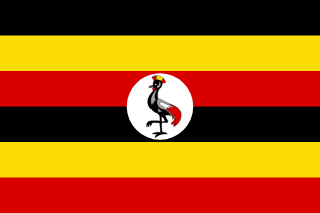
Discover
The identity of the nation
Uganda is a landlocked country in East Africa, known since colonial times as the “Pearl of Africa” for its green hills, mild climate and the beauty of Lake Victoria and the source of the Nile River. It is also, quietly, one of the places in the world where Christianity has grown the most over the last hundred and fifty years: more than 8 in every 10 Ugandans today identify as Christians.
This story began in a difficult way. In the first years after the arrival of the first missionaries, between 1885 and 1887, the local king ordered the killing of dozens of young converts, both Catholic and Anglican, who refused to deny their faith in Christ. They became known as the Martyrs of Uganda, and their blood became, for many historians of the African church, the seed of a Christianity that has not stopped growing since.
Decades later, in the 1930s, Uganda was one of the centers of a revival movement known as the Balokole (a Luganda word meaning “the saved ones”). This movement deeply shaped the way Ugandans live out their faith to this day: with great joy, open confession of sin and a real desire to live what the Bible teaches, not just attend a church building. This legacy still pulses through the country’s churches, among the most vibrant and numerous in Africa.
At the same time, Uganda today lives out a practical calling of welcome: it is the country that receives more refugees than any other in Africa, with more than two million people arriving from South Sudan, the Democratic Republic of Congo and other neighboring countries in conflict. This puts the local church in a unique position to serve, disciple and show the love of Christ to those who arrive with nothing. At the same time, the country still carries wounds: the trauma of years of war in the north, widespread belief in witchcraft and traditional healers even among families who call themselves Christian, and an armed group of Islamist inspiration that still attacks communities on the western border, near Congo.
Uganda today is not just a field that receives: it is increasingly a country that also sends. Ugandan Christians have gone to other parts of Africa and the world as workers, carrying the same enthusiasm and practical faith that marked last century’s revival. The greatest challenge for the church in the country is not a lack of Christians, but the depth of faith: turning a Christianity of tradition into disciples who know the Bible, resist mixing it with old beliefs, and live out the hope of the gospel in every area of life.
- 19th century The Kingdom of Buganda is already one of the most organized and powerful states in the region, ruled by a king called the kabaka
- 1862 British explorer John Hanning Speke reaches the source of the Nile River, paving the way for the first contacts with Europeans
- 1877 The first Protestant missionaries arrive, invited by the reigning king of Buganda himself
- 1885-1887 The local king orders the killing of dozens of young Christians, Catholic and Anglican, who became known as the Martyrs of Uganda
- 1894 The territory becomes a British protectorate
- 1962 Uganda gains independence from the United Kingdom
- 1971-1979 A dictatorial regime marked by extreme violence and the expulsion of the community of Indian origin
- 1986 A new government takes power after years of civil war and remains in charge of the country to this day
- 1990s-2000s The north of the country suffers the violence of the rebel group Lord's Resistance Army (LRA), which kidnapped thousands of children
- Today Uganda is going through a period of greater stability and economic growth, but still faces challenges of poverty and corruption
-
Englishofficial language, used in government, law and higher education
-
Swahilisecond official language, most used in trade and the armed forces
-
Lugandamost widely spoken mother tongue in the country, mainly in the central region, where Kampala is located
-
About 40 other local languageseach linked to one of the country's peoples; several still do not have a complete Bible translation
Uganda lies in East Africa and is landlocked: it borders Kenya, South Sudan, the Democratic Republic of Congo, Rwanda and Tanzania. The country is crossed by the equator and bordered, in the south, by Lake Victoria, the largest lake in Africa. It is on its shores, in the city of Jinja, that the Nile River rises, one of the most important rivers in the world. The landscape is largely made up of green, fertile plateaus, which helps explain the nickname "Pearl of Africa" given to the country back in colonial times. In the west, the Rwenzori Mountains reach snow-capped peaks, something rare so close to the equator.
Major cities
- Kampalacapital and largest city, the country's political and economic center
- Jinjaknown as the source of the Nile River, a tourist and adventure destination
- Entebbecity on the shores of Lake Victoria, home to the international airport and botanical gardens
- Gulumain city of the north, still recovering from years of civil war
- Mbararaeconomic center of the southwest, gateway to several national parks
- Mbalecity at the foot of Mount Elgon, in the east of the country
Climate and temperature
Matoke
boiled and mashed green plantain, the country's most traditional dish
Rolex
scrambled egg with vegetables rolled inside a thin wheat flatbread (chapati), very popular as street food
Luwombo
meat, chicken or fish slow cooked inside banana leaves, a festive dish that originated in the court of the Buganda kingdom
Posho
firm porridge made from maize flour, served alongside almost every meal
Chapati
thin, soft flatbread cooked in a pan, eaten plain or inside other dishes
Nsenene
fried grasshoppers, a traditional snack much enjoyed during the rainy season
Understand
Culture and spirituality
2a · The culture
The traditional kingdoms
Uganda has several historic kingdoms, such as Buganda, Busoga, Toro, Bunyoro and Ankole, which keep their own kings and customs within the modern state
The kabaka
the king of the Baganda people, today mainly a cultural and symbolic figure, but still highly respected
Dance and drums
traditional rhythms and dances, such as bakisimba, are part of almost every important celebration
The boda-boda
motorcycle used as a taxi, the most common means of transport in cities and in the countryside
Hospitality
welcoming visitors well, with food and attention, is considered one of the greatest local virtues
Respect for elders
the elderly receive special honor within the family and the community
The source of the Nile
in Jinja, the Nile River rises from Lake Victoria, a geographic and historic landmark of the country
The name "Pearl of Africa"
nickname used since colonial times to describe the country's natural beauty, with its green hills and mild climate
- Pointing your feet at someone or showing the sole of your shoe seen as disrespectful in various local cultures
- Using the left hand to hand something over or to eat traditionally considered less honorable than the right hand
- Photographing police officers, government buildings or bridges without permission can cause problems with local authorities
- Wearing camouflage-print clothing wearing military-style clothing is prohibited by law in the country
- Showing physical affection in public, such as romantic kissing or hugging considered inappropriate, especially outside the big cities
- Touching someone's head, even a child's, without permission the head is seen as a sacred part of the body in various local traditions
- Refusing food offered by a host seen as disrespectful of hospitality, which is highly valued in the country
- Speaking lightly about the war and the years of dictatorship a sensitive and still painful topic for many families
2b · The field
Areas of spiritual battle and cultural captivity to cover in prayer. Tap each point to understand:
widespread belief in traditional healers to seek healing, protection and wealth, including extreme cases of child sacrifice
many people are baptized as children but never come to live out a deep discipleship in the Christian faith
loyalty to one's own ethnic group sometimes outweighs unity as a nation or as a church
the diversion of public funds hinders the country's development and fuels distrust in institutions
the trauma left by years of conflict in the north, including the kidnapping of children, still weighs on many families
Uganda has one of the highest rates of alcohol consumption per person in all of Africa
a traditional practice in some regions that challenges biblical teaching on marriage
an armed group of Islamist inspiration operates in the western region, near the border with Congo
women face inequality and, in many homes, domestic violence
the growth of cities brings with it the pursuit of status and money as new idols
In most of Uganda, Christians can gather, build churches and speak of their faith freely, since the majority of the population identifies as Christian. The greatest risk falls on a specific group: people who decide to leave Islam to follow Jesus, especially in the east of the country.
These new converts often face rejection from their own families, community pressure and, in some cases, physical violence because of their change of faith. There are recent reports of assaults, threats and even the burning of homes linked to these communities.
In the west of the country, on the border with the Democratic Republic of Congo, an Islamist armed group called the Allied Democratic Forces (ADF) has been active for years, trying to impose a territory under radical Islamic rules through violence. Churches and Christian villages in the region have already been targeted by attacks from this group.
Outside of these specific situations, the Christian faith is free and even publicly encouraged in Uganda. The greatest challenge for the church in the country is not so much persecution from outside, but the need for deeper discipleship, one that goes beyond the tradition inherited from previous generations.
The persecution score runs from 0 to 100: the higher it is, the greater the pressure on Christians.
Uganda has 66 catalogued ethnic groups, and the vast majority already have access to the gospel and established Christian communities: more than 90% of the country's population belongs to peoples considered significantly reached. Only two peoples are still classified as unreached by the Joshua Project: the Aringa, a majority-Muslim people in the northwest of the country, on the border with South Sudan, and the small Guzerate community, of Indian origin and Hindu tradition, present mainly in the cities. Together, they add up to a little over 1 million people, a small fraction of the total population, but still without a meaningful Christian presence among them.
- 1.1M Unreached 2,1%
- 1.2M Minimally reached 2,4%
- 5K Superficially reached 0%
- 442K Partially reached 0,9%
- 48.3M Significantly reached 94,7%
- 2 Unreached 3%
- 2 Minimally reached 3%
- 1 Superficially reached 1,5%
- 13 Partially reached 19,7%
- 48 Significantly reached 72,7%
Source of people group data: Joshua Project (joshuaproject.net). Estimates, may vary.
Gujarati Frontier
Arab Lebanese Muslim
Swahili Frontier
Hindi
Toposa Frontier
Nubio nubi
Deaf Frontier
Source: Joshua Project. Estimates, may vary.
Pray
Intercede for this nation
Every nation carries a redemptive purpose. Marks that seem woven into the identity God desires to restore:
Go
Practical details for those who want to go
Local time
Cost of living
average price of a basic meal in Kampala
Cost by city
Reference values (source: Numbeo). Confirm before traveling.
Practical points for those who go
- Malaria is a common disease in the country; bring repellent and talk to a doctor about prevention before your trip
- Tap water is not always safe to drink; prefer filtered, boiled or bottled water
- Electricity has frequent outages, even in Kampala; bring a flashlight and a portable charger
- Boda-boda (motorcycle taxi) is the most common form of transport, but also the riskiest; always wear a helmet and negotiate the price before getting on
- Mobile money (through the phone) is used as much as or more than credit cards in daily life
- Clothing that covers shoulders and knees is better received, especially outside the big cities
Send and sustain
Not everyone goes, everyone takes part
Not everyone goes. Everyone takes part.
Behind every worker among these peoples stands a network of people who pray without ceasing, care for the family left behind, and faithfully sustain the work. Sending is mission too.
Start with your church: introduce this nation, adopt it in ongoing prayer, and walk alongside those God is raising up to go.